How can we end the greatest cause of animal suffering in slaughter-houses?
Live-shackling is the single greatest cause of animal suffering in slaughterhouses today. For the billions of chickens who deserve better, it must end.
 Kelly Myers


Live-shackling is the single greatest cause of animal suffering in slaughterhouses today. For the billions of chickens who deserve better, it must end.
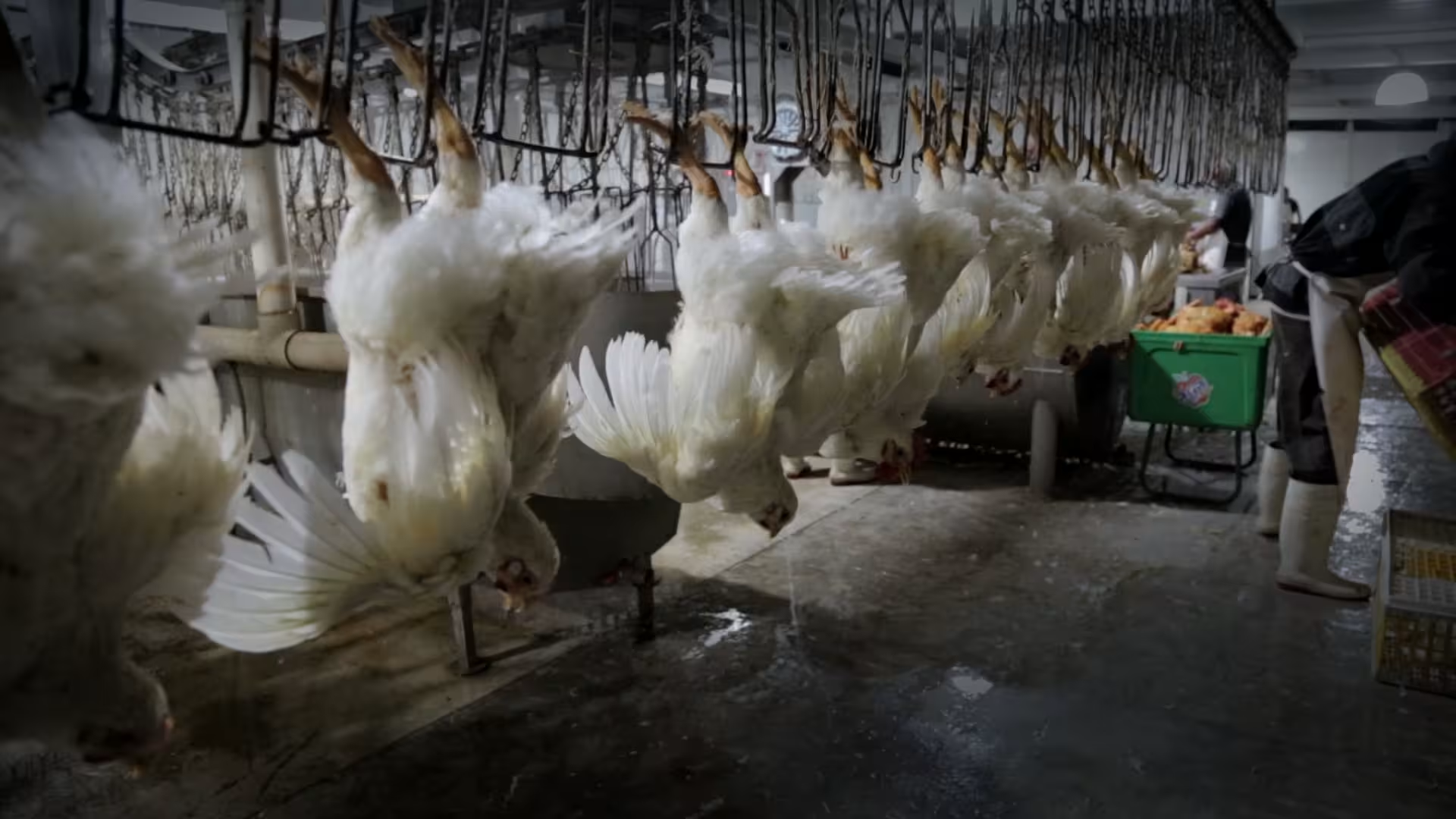


As you read this, there’s a chicken hanging painfully upside down. Her legs—one of them now broken—have been jammed into metal shackles attached to a conveyor belt. The smell of blood hangs in the air. She’s disoriented, barely able to breathe, and scared out of her mind. And she’s still a baby—just six to seven weeks old. She experienced many horrors in the factory farm where she spent her short life. Yet, this very second is the most terrifying moment of all. And she doesn’t yet know that it’s about to get worse.

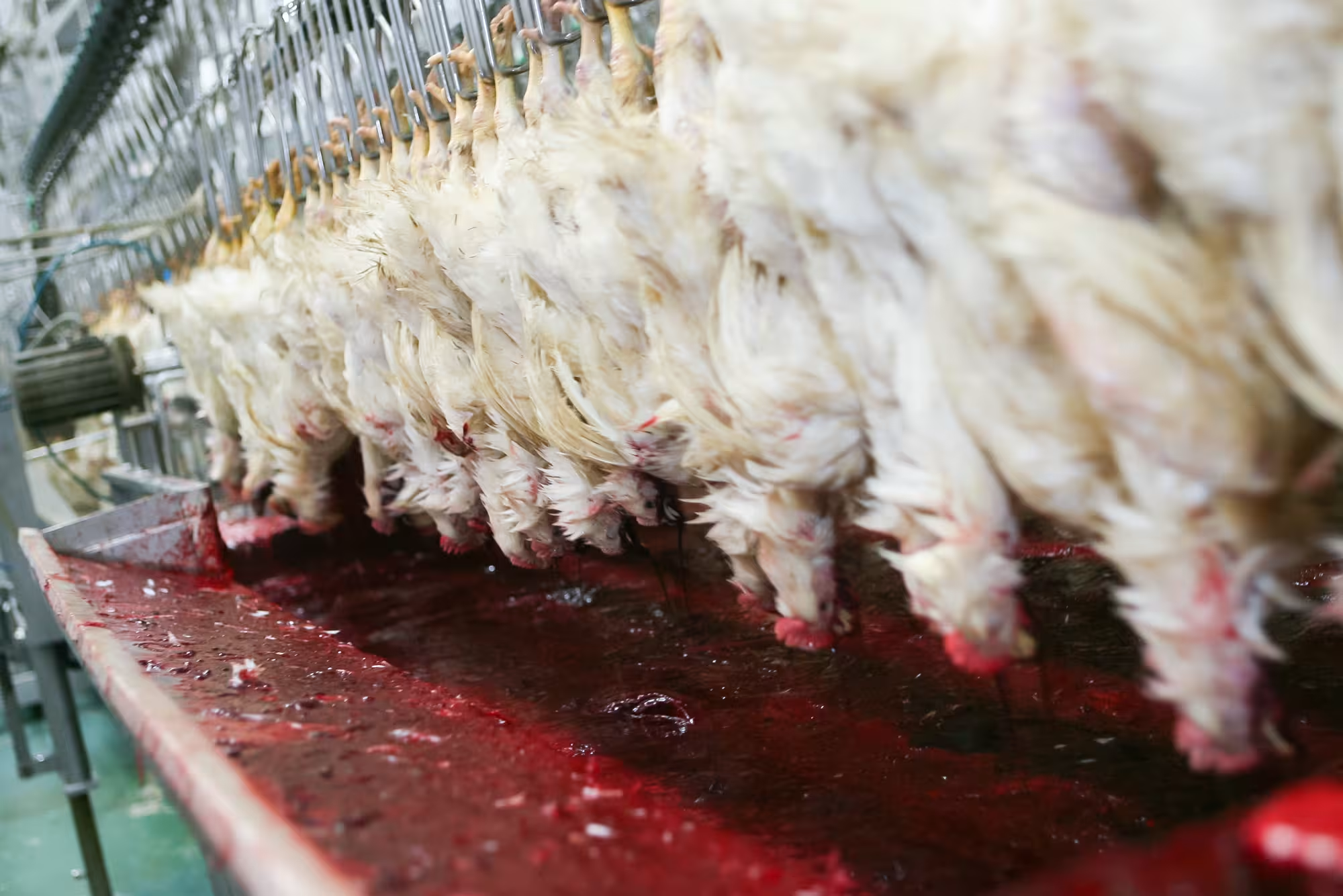
What awaits is a cruel series of events, collectively called live-shackle slaughter. After being hung upside in the metal shackles, she’ll move down the tightly-packed conveyer belt to be dunked, head-first, into electrified water known as the stun bath. If she’s lucky, this will knock her unconscious. If not, she’ll become one of millions of birds who either miss the stun bath, or who are paralyzed but still awake and able to feel pain when she’s led to a mechanical knife that slashes at her throat. Lastly, she’ll end up in the scalding bath—in which roughly half a million panicked birds, who are not fully killed by the knife, are boiled alive every year.
It sounds like a torture chamber. It’s hard to argue that it’s not. But tragically it’s also the industry standard for turning live chickens into nuggets, wings, and other marketable body parts.
Live-shackling embodies the slaughter industry’s single greatest cause of animal suffering. And chickens—who account for nine out of ten land animals killed for food—are its greatest victims.
As an organization whose mission is to end the abuse of animals raised for food, The Humane League not only opposes live-shackle slaughter, we intend to end it.
How? One way is through plant-based advocacy. Our outreach continues to awaken millions of people to the injustices that take place behind the closed walls of factory farms and slaughterhouses. Every day we inspire more people to replace meat with kinder, plant-based alternatives. But, until every person removes chicken from their plates this is not enough to stop the conveyor belts from moving, the mechanical knives from slashing, or the scalding tanks from painfully taking lives.
We know that 9 billion chickens will be killed for meat this year in the US. On their behalf, we are also mounting intense pressure on corporations that have the means to change, and ultimately transform, our broken food system now.
Our campaigns have already helped convince the industry giant, Tyson Foods, to abandon live-shackle slaughter at four of its US processing plants—the code name for slaughterhouses. This will be achieved through a transition to Controlled Atmosphere Systems (CAS). CAS eliminates the need for chickens to suffer the horrors of the kill floor, and all that live-shackle slaughter entails, while they are conscious. Instead, birds are sedated to the point of unconsciousness before being removed from crates, manhandled, or shackled—undoubtedly a less distressing ordeal.
But this system is not without its risks. Executed poorly, or with the wrong gas concentrations, it’s possible that CAS can also cause distress. That’s why a multi-phased and monitored process is needed, in which chickens are exposed to relatively low concentrations of CO2 before being exposed to a higher dose that induces a deeper state of unconsciousness. It’s not a perfect solution. No slaughter is. But until the meat industry sees its way to cultivate meat from cells or plants, it’s without a doubt the best science-backed option chickens currently have.
And it means an end to boiling half a million birds alive every year. It means an end to sending millions—potentially billions—of terrified chickens to have their throats slit while paralyzed but fully conscious and sensitive to pain. Every year.
We know this suffering is preventable. And we know that a world free from animal abuse starts with a world with less animal abuse. We’ve seen first hand—across campaign victories and legislative wins—that big social change is a journey of small, yet meaningful, incremental steps. Ending the use of cages. Giving animals more space. Ending live-shackle slaughter. All of these wins change the factory farming system, slowly breaking down its walls and getting us closer to our goal—to end the abuse of animals for food.
Right now—this year—billions of living beings will endure the atrocities of live-shackle slaughter, unless we put a stop to it. You have the power to end this abuse.
Please join us to urgently call on the chicken industry to end live-shackle slaughter.
Images representative of slaughterhouses that use the live-shackle process.
About The Humane League
We are a global nonprofit ending the abuse of animals raised for food.
Learn More
SUPPORT THE HUMANE LEAGUE


Already a sustainer? Manage monthly gifts


