Here's why going vegan is the best thing we can do for the planet
If you’re looking to reduce your impact on the environment, discover 14 reasons why eating a plant-based diet is one of the best choices you can make.
 Alanna Ramsier


If you’re looking to reduce your impact on the environment, discover 14 reasons why eating a plant-based diet is one of the best choices you can make.


Our environment provides us with fresh water to drink, clean air to breathe, and fertile soils to grow nourishing food. But human activity is pushing our planet to its limits, and we’re already paying the price. If we don’t take action to slow the threat of irreversible climate change and environmental degradation, we will lose the majestic lakes and rivers, lush forests, rich soils, and other natural resources that sustain our lives on Earth.
Thankfully, we already have the key to living in a way that’s more sustainable and kinder to our planet. Veganism—a diet that excludes meat, dairy, and other animal products in favor of plant-based foods—presents us with the opportunity to reduce our individual impact on the environment and create a livable future for us all.
What are the benefits of veganism on the environment?
When asked why veganism is good for the environment, the science is clear about its positive effects. Every piece of food we eat makes its own impact on the environment. But some foods make much more of an impact than others. The production of meat takes a huge toll on our planet. Breeding, raising, and slaughtering billions of animals for food every year requires massive amounts of natural resources, like fresh water and land, and generates massive amounts of waste and pollution. Simply put, our appetite for meat—and the factory farming system that feeds it—is unsustainable.
But we don’t have to rely on unsustainable factory farms to feed us. This is where veganism comes in. By eliminating our consumption of animal products and making the switch to plant-based eating to help the environment, we can stop the rapid depletion of Earth’s resources, slow the threat of climate change, and help protect our planet for generations to come.
Veganism and climate change
The United Nations’ 2023 State of Global Climate report was record-breaking—and not in a good way. 2023 was the hottest year on record—capping off the hottest decade the earth has ever seen.
These findings align with the warnings of its previous report. The United Nations’ 2021 report on climate change issued a “code red” for all of humanity: the climate crisis is playing out in realtime, and, if we don’t act soon, frequent natural disasters and rising ocean levels will put millions of people in immediate danger. We only have a few years to cut our greenhouse gas emissions, which will require a cascading series of paradigm shifts within our global economic system—as well as in our individual behaviors.
Fortunately, the 2021 report wasn’t all doom and gloom: it provided concrete, actionable steps on how we can achieve the emissions reduction needed to address the crisis at hand. The UN identifies plant-based diets “as a major opportunity for mitigating and adapting to climate change,” and it recommends that governments around the world adopt policies to reduce meat consumption in their countries and regions.
While new government policies have the potential to create a huge shift in our food system, the good news is that we, as individuals, already have the power to combat climate change through our food choices. Read on to find out how going vegan can reduce your individual impact on the environment—and how these positive impacts can add up to a more sustainable food system for all.
Veganism reduces greenhouse gas emissions
Each one of us has a “carbon footprint”—a net total of greenhouse gas emissions generated by our own actions. In the US, our consumption habits generate an average 16 tons of carbon emissions per year. This represents one of the highest average carbon footprints of any country. To put this in perspective, if everyone in the world consumed resources like we do in the US, we would need the equivalent of five planet Earths to sustain everyone’s lifestyles.
What we eat is one of the biggest contributors to our individual carbon footprint, and going vegan can ease our diet’s burden on the planet. In fact, a study from Oxford University identified going vegan as the “single biggest way” we can reduce our carbon footprint, shrinking it up to 73%.
This drastic reduction is due to the fact that every step of the production process for animal products like beef and dairy generates greenhouse gases: from the clearing of forests to make way for animal pasture, to the production of millions of tons of animal feed, to the immense waste generated by cows, pigs, chickens, and other farm animals.
Overall, the process of raising and killing animals for meat is much more carbon-intensive than just growing and harvesting plants for food. Joseph Poore, the Oxford study’s lead author, explains: “Converting grass into (meat) is like converting coal to energy. It comes with an immense cost in emissions.”
In fact, producing plant-based meat emits up to 90% fewer greenhouse gases than producing conventional meat. Just one plant-based meal can save the same amount of carbon emissions it takes to drive a car across the country. If that’s the impact one meal can make, it’s no surprise that following a plant-based diet full-time can result in a much smaller carbon footprint. And, if more and more individuals adopt a plant-based diet, this impact will create a huge shift in our food system, reducing our whole species’ greenhouse gas emissions and helping slow climate change.

Stopping livestock emissions
Although we hear a lot about carbon dioxide emissions in conversations around climate change, another greenhouse gas plays a significant role in warming our atmosphere: methane. Methane is 80 times more potent at trapping heat in the atmosphere than carbon dioxide, and it accounts for up to 30% of global warming since pre-industrial times.
A majority of human-caused methane emissions come from animal agriculture, with 32% coming from livestock digestion and waste. This is because cows actually belch out methane while digesting their food. Each year, a single cow belches 220 pounds of methane into the atmosphere. Multiply those emissions by the 1.5 billion cows in our global food system, and it adds up to a dangerous amount of methane in our atmosphere.
In order to stop methane emissions, the UN recommends “shifting toward plant-based diets and embracing alternative sources of protein.” They estimate that humans could cut methane emissions by 45%, which would be critical to slowing global warming.
Removing nitrous oxide
Nitrous oxide is not the biggest or most well-known greenhouse gas—it only accounts for about 6% of total human-caused emissions—but it is dangerously potent. Nitrous oxide emissions remain in the atmosphere for about 100 years before natural processes can break it down, and the compound is 300 times more powerful at driving the greenhouse effect than carbon dioxide.
Since 1980, plant and animal agriculture has been responsible for almost two-thirds of human-caused nitrous oxide emissions. And, once again, animal waste is a huge culprit. Factory farm operations generate so much animal waste that they don’t know what to do with it: some of it goes back to the soil in the form of manure, while some of it sits in cesspools of waste known as “factory farm lagoons.” No matter where it goes, all of this waste results in nitrous oxide emissions, which pollute the atmosphere and accelerate climate change. By eliminating your meat consumption, you can stop the ongoing spread of pollution from factory farms.
A vegan diet reduces energy consumption
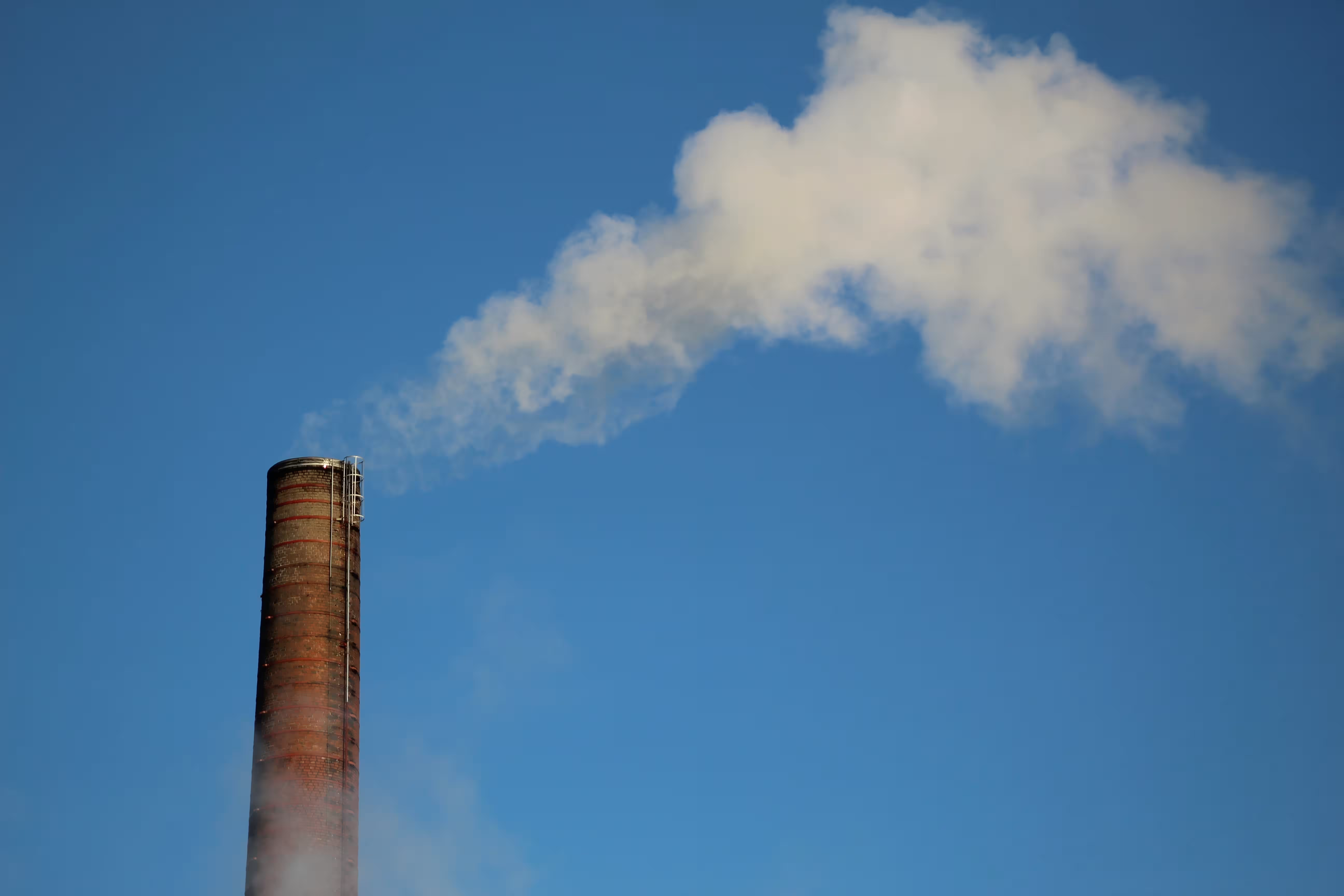
Animal waste is not the only source of dangerous emissions in the meat industry. Our food system relies on energy from fossil fuels to grow, prepare, and transport food. Globally, burning fossil fuels is the largest single source of greenhouse gas emissions, accounting for 25% of emissions worldwide.
Meat requires a lot of processing before it is suitable for human consumption, and meat processing requires a lot of energy. It takes about 31.5 kilowatt-hours of energy to produce one pound of beef—a little under the amount of energy your fridge uses to run for a whole month. Plant-based sources of protein, like beans and nuts, require much less processing and are therefore much more energy-efficient than meat. Making the switch to plant-based saves energy consumption and reduces fossil fuel emissions.
Veganism conserves water
We all need access to clean, drinkable water to survive as a species. When we consume fresh water at a faster rate than its supply can naturally replenish, we risk disrupting the water cycle, which could lead to long periods of drought and global water shortages. If we don’t change our water consumption habits and reduce our water footprint, the UN estimates that 700 million people could face "intense water scarcity" by 2030—which is rapidly approaching.
Agriculture consumes more water than any other major global industry, accounting for 70% of global water use. A study published in Water Resources Research estimates that 41% of the water used for agriculture goes toward growing livestock feed for the meat industry. It takes about 460 gallons of water to make one quarter-pound beef patty—that’s the equivalent of taking 23 showers.
We can save a significant amount of water by ditching meat products and making the switch to plant-based foods. In fact, switching to a vegan diet reduces your individual water footprint up to 55%. Going vegan could prove essential to conserving our global freshwater supply for generations to come.
Stabilizing the ocean
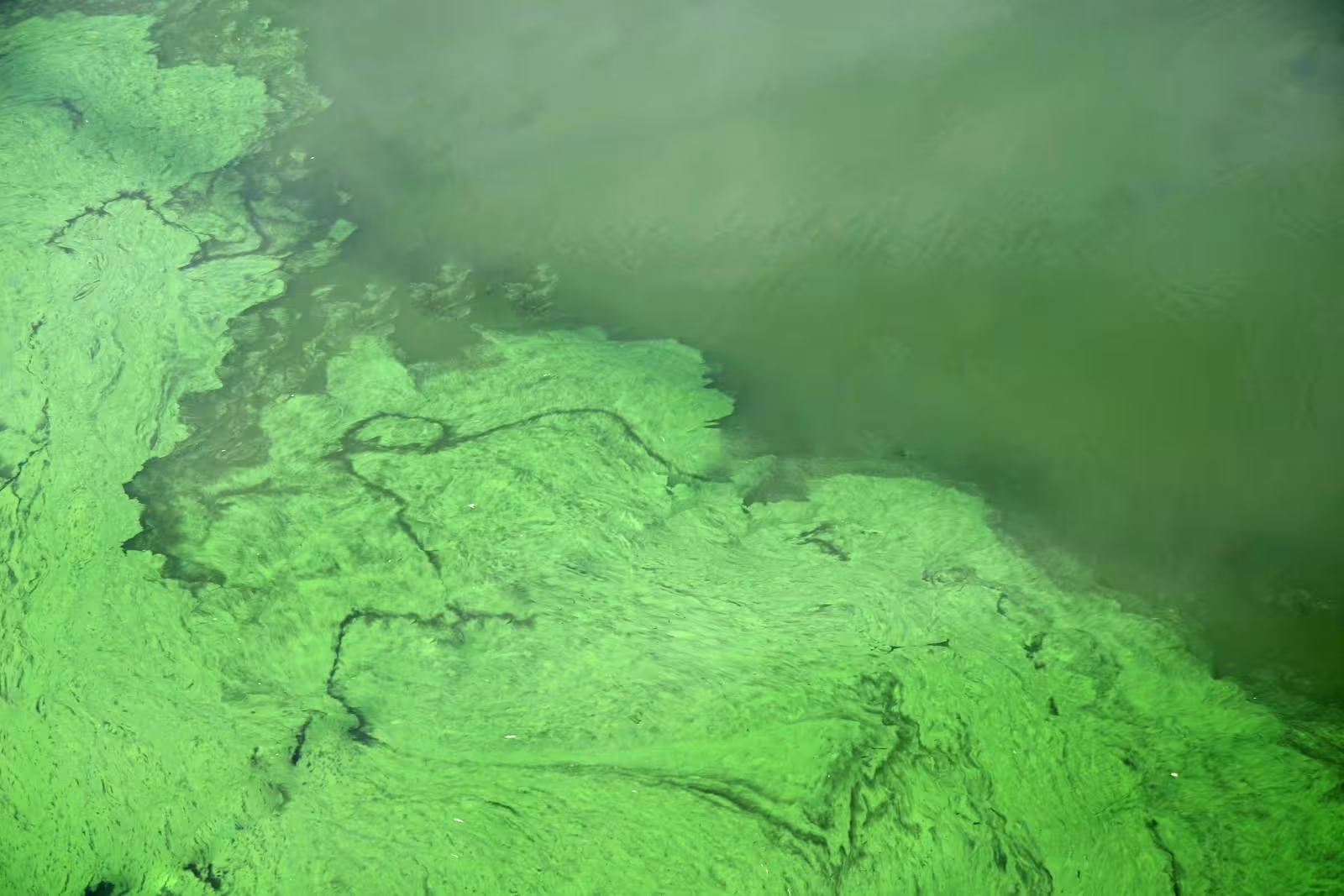
We’ve already learned that factory farm waste pollutes the air with methane and other greenhouse gas emissions, but these massive amounts of animal waste can wreak havoc on our oceans, too. The nitrogen and phosphorus in animal waste can make their way into our oceans and chemically react with the water to create “dead zones”—areas where oxygen levels are too low for anything but algae to survive. Millions of square miles of The Gulf of Mexico are entirely void of marine life, all because of the influx of animal agriculture pollution and the resulting dead zones.
The greenhouse gas emissions that warm the atmosphere also raise ocean temperatures. The warming of oceans kickstarts a process known as ocean acidification—a process that changes the chemistry of ocean water, making it more acidic. Acidification can make water uninhabitable to marine life and kill off entire reef ecosystems, turning areas that were once vibrant and biodiverse into barren wastelands.
The global meat industry—including the multi-billion dollar fishing industry—pollutes and destabilizes our oceans. When we leave land animals and fish off our plate, we take a stand against these industries’ destruction of our oceans—giving underwater ecosystems a chance to stabilize and recover.
Veganism protects the rainforest and lands
It takes a lot of land to meet global demand for meat—so much that about one-third of the Earth’s landmass is dedicated to raising animals for consumption. The meat industry clears millions of acres of forested land to make room to graze cattle and grow crops for animal feed. This process, known as deforestation, releases stored carbon from forests into the atmosphere, exacerbating our climate crisis even further.
Animal agriculture—specifically cattle ranching—is responsible for a vast majority of deforestation in the Amazon rainforest, the world’s largest tropical forest. Over a fifteen year period, the meat industry slashed and burned over 111 million acres of forests, the equivalent of 84 million football fields.
Meanwhile, plant-based meat alternatives don’t require nearly as much land to produce. In fact, the Good Food Institute estimates that plant-based meat uses up to 99% less land than conventional meat. If the whole world shifted toward plant-based diets, we could save up to 75% of global farmland. That’s an area “the size of the US, China, Australia and the EU combined,” according to researchers at Oxford University. Forest ecosystems would reap the greatest benefits of the world going vegan: one estimate shows that, if we got our protein from plants instead of animals, deforestation could decline 94%.
Preserving habitats and preventing species extinction
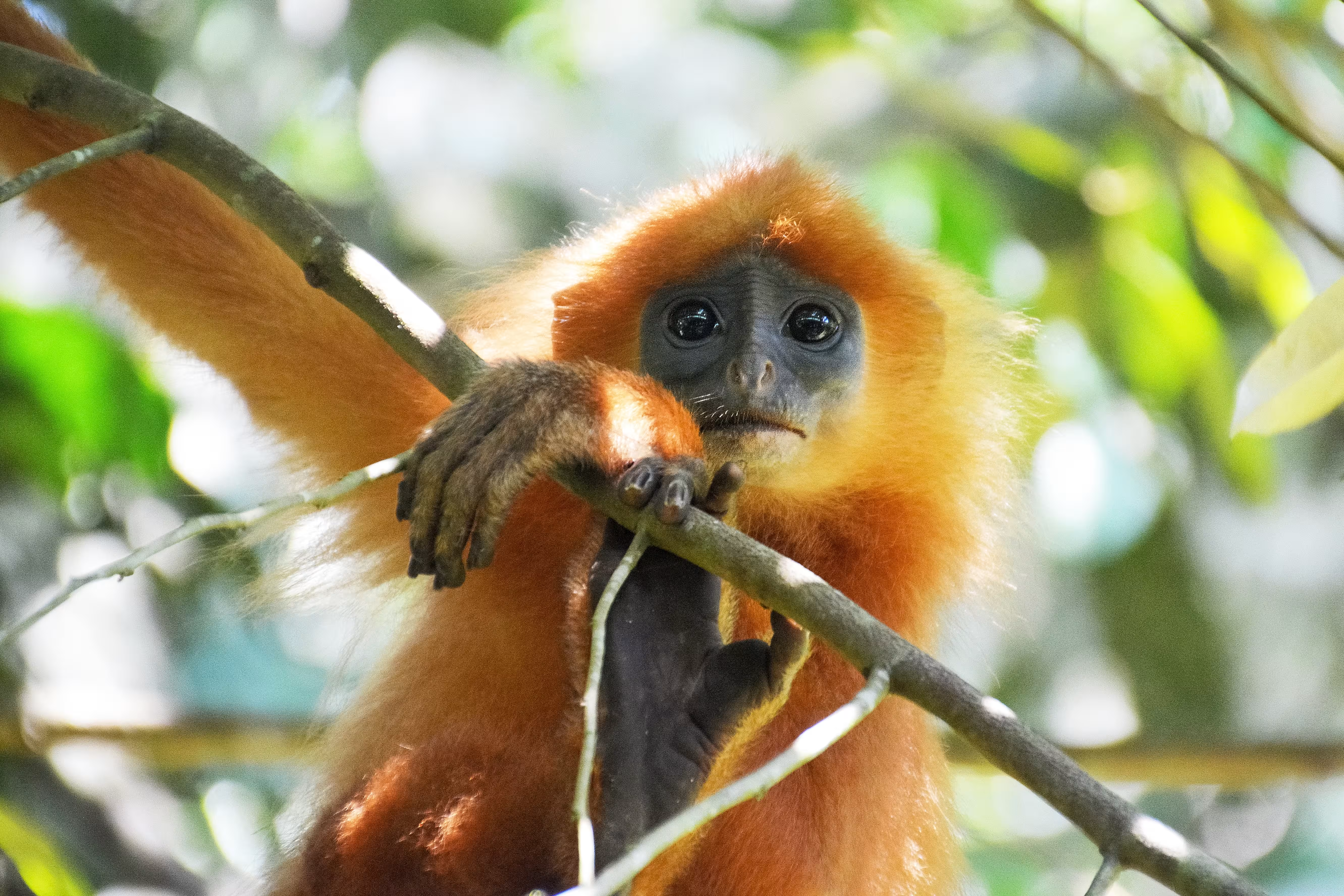
When the meat industry clears forests for cattle and cropland, it doesn’t just destroy the trees—it takes away habitat for the thousands of species who call forests home. As species lose out on their habitats and the resources they need to survive to deforestation, their populations slowly die out, sometimes to the point of extinction. In fact, deforestation drives an estimated 135 different species of plants, animals, and insects to extinction every day.
Animal agriculture is the biggest driver of deforestation in the Amazon rainforest, which houses over 10% of the Earth’s biodiversity. By leaving animals off of our plate and reducing demand for meat, we take away the meat industry’s incentive to destroy forest habitats for their production—not only saving farm animals, but protecting wild animals, too.
Veganism protects the soil
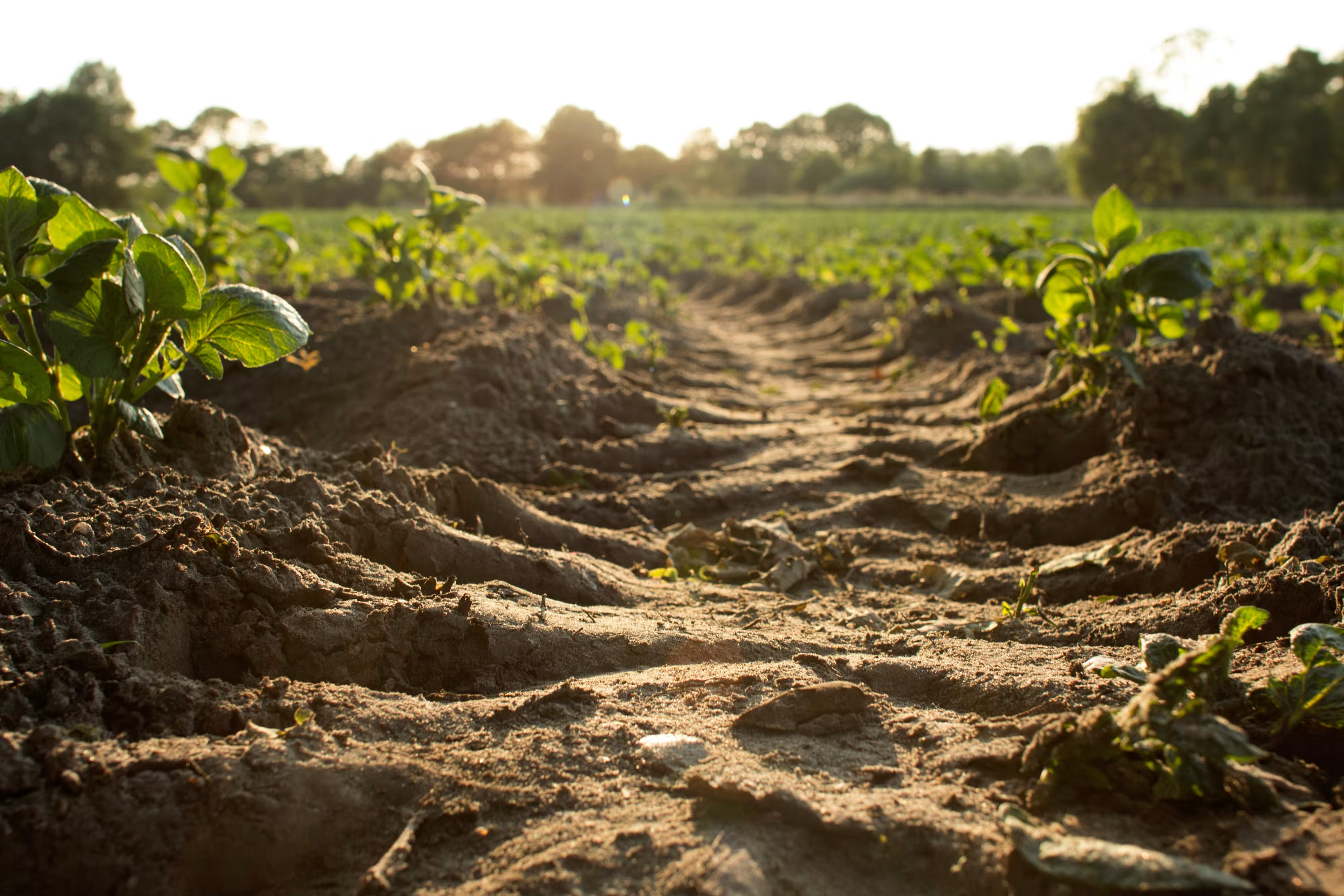
Healthy soil is essential to feeding our planet, but human activity is making healthy soils disappear. When soil health declines, farmers can no longer rely on it to produce the amount of crops they need to feed their communities. According to the International Union for the Conservation of Nature, if soil degradation continues at its current rate, we could experience a “food production shortfall of 25% by 2050.”
Animal agriculture contributes to soil degradation in two ways. First, the widespread deforestation for cattle-grazing and feed production erodes nutrient-rich top soil, making the soil unsuitable for plants to grow. Second, farmers who grow corn and soy for animal feed often over-cultivate soil in an effort to produce as much product as cheaply as possible. They don’t give the soil enough time to recover and restore its nutrients, which may maximize their harvest in the short-term—but destroys the soil in the long-term.
Reducing demand for meat and making the switch to plant-based foods gives soil the opportunity to heal. By freeing up land that was once used for meat production, we make space for the process of “rewilding”—letting environments get back to their natural rhythms and recover from degradation.
Using fewer resources
Meat production eats away at so many of the Earth’s precious resources—millions of gallons of freshwater, vast stretches of prairies and forested land, and entire ocean ecosystems, all lost to feed the world’s appetite for meat.
It doesn’t have to be this way. As it stands right now, we use millions of acres of land to grow massive amounts of crops just to feed animals in our food system. Meanwhile, growing crops for direct human consumption is a much more straightforward process. It requires less processing, less land, less energy input, and less water than raising and killing animals for food. In short, plant-based protein is more efficient and easy to produce than animal protein.
Veganism combats world hunger
Within our current food system, 8.9% of the world’s population suffers from undernourishment and food insecurity. That’s 690 million people who may not know where their next meal is coming from. And, since soil degradation and climate change may further disrupt global food production, more people may lose access to the healthy food they need to survive.
As we’ve previously explored, going vegan stops the deforestation, soil degradation, and greenhouse gas emissions associated with meat production, helping to slow climate change and secure our global food supply. And, if the whole world shifted toward a plant-based diet, we could free up 75% of global farmland that’s currently used to graze animals and produce animal feed. That land could go toward growing healthy, plant-based protein to feed more people and alleviate world hunger.
Veganism makes people healthy
Factory farms keep animals in filthy, crowded conditions, creating the perfect environment for diseases and pathogens to spread. Instead of providing animals with more space or taking better care of their facilities, the meat industry suppresses the spread of disease in the short-term by pumping animals with antibiotics. In the long-term, this contributes to the growing threat of antibiotic resistance—the development of drug-resistant “superbugs” that can spread rapidly and endanger public health. If antibiotic use continues at its current rate, the UN warns that “antimicrobial resistant infections may become the leading cause of death globally by 2050.”
Right now, the vast majority of antibiotics produced in the US are administered to animals raised for food. By switching to plant-based and reducing demand for meat, we reduce the meat industry’s dangerous rates of antibiotic consumption and help protect public health.
Will going vegan, vegetarian, or reducetarian help save the planet?
Our food system is broken, and our planet is paying the price. But we have the power to create a more sustainable food system for animals, for the planet, and for us all by rethinking our diets.
There are incremental steps we can take to help protect our environment from animal agriculture’s global damage. Beginning with a reducetarian (climatarian) diet is a strong start: cutting back on eating meat reduces your carbon footprint by 25%. On a climatarian diet, one person per year can save a ton of carbon dioxide equivalents. A vegetarian diet is even better—producing about half of the carbon dioxide emissions of a standard Western meat-based diet.
Finally, adopting a plant-based diet is the single biggest way we can reduce our individual impact on the environment. And, while it may not solve every single one of the world’s problems, it helps stop the threat of climate change—which, according to the UN, is the “biggest threat modern humans have ever faced.” Join the movement to save our planet by making the switch to plant-based. Check out our free plant-based starter guide, Eating Veg, for recipes and tips on making the switch.


