NY TAKES ON OCTOPUS FARMING
Octopuses have captured the world’s curiosity. Now New York lawmakers are considering a bill to keep them off farms—and stop a controversial industry before it gains momentum.


Octopuses have captured the world’s curiosity. Now New York lawmakers are considering a bill to keep them off farms—and stop a controversial industry before it gains momentum.


Octopus farming hasn’t reached the United States. Lawmakers in New York are considering a bill that could help stop it before it does.
Assembly Member Tony Simone has introduced A.8043B, legislation that would prohibit the sale or trade of products from commercial octopus farms within the state. The bill was recently reviewed by the Assembly Environmental Conservation Committee, marking an early step in the legislative process.
Because octopus farming has not yet taken hold in the United States, lawmakers still have the chance to step in. Acting early could prevent an industry built on farming highly intelligent animals in conditions that raise serious welfare and environmental concerns.
Why octopuses don’t belong on farms
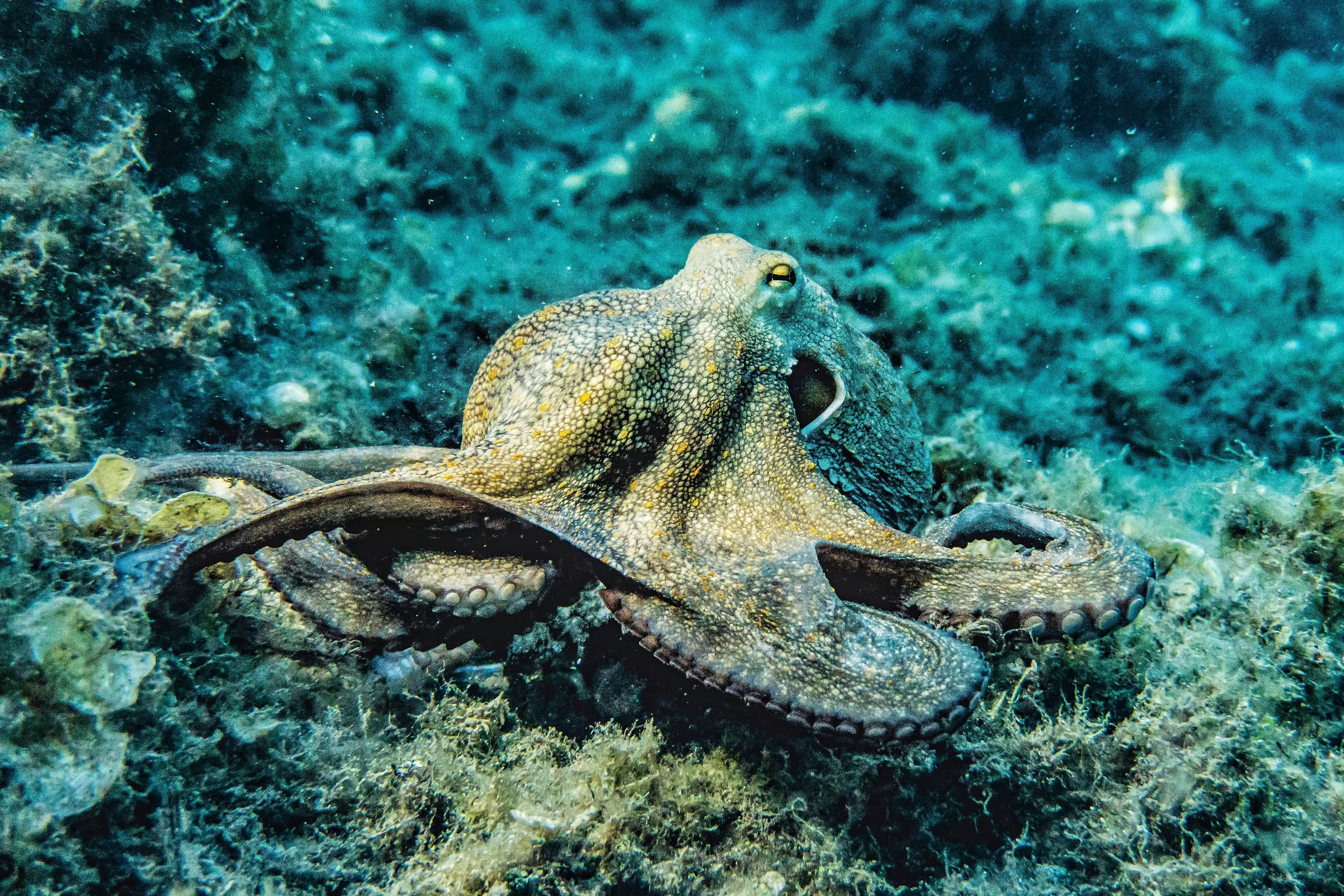
There’s a reason octopuses have captured people’s imaginations—they’ve become unlikely stars of science stories and documentaries alike. Octopuses are considered among the most intelligent invertebrates on Earth. They have been reported to unscrew jar lids, recognize individual humans, and even appear to dream. Their intelligence points to animals with rich inner lives we're only beginning to understand.
In the wild, octopuses are solitary animals. They spend most of their lives hunting, hiding, and navigating complex environments like reefs and rocky seafloors. Farming conditions change that entirely. When octopuses are kept in crowded tanks, stress and aggression can escalate quickly.
In limited octopus farming trials, researchers have observed fighting, cannibalism, and extremely high mortality. Shared tanks and artificial environments simply don’t match how these animals naturally live.
Slaughter presents another challenge. Because octopus farming is still largely experimental, there is no widely accepted humane way to kill them at scale. The proposed methods, including freezing conscious octopuses in ice slurries, would cause these sensitive beings to die slowly in terror and pain.
For now, the United States still has the chance to choose a different path.
The wider impacts of octopus farming
The concerns about octopus farming go far beyond animal welfare. Researchers and policymakers are also looking closely at the broader impacts this industry could have.
Environmental risks
Octopuses are carnivorous animals with diets rich in wild-caught seafood such as fish and crab. Farming them at scale can put strain on already overfished marine ecosystems. Aquaculture facilities can release waste and excess nutrients into surrounding waters, contributing to pollution that harms marine habitats.
Public health concerns
Workers in these facilities would face risks from venomous octopus bites and exposure to dangerous pathogens. The antibiotics commonly used in aquaculture contribute to the growing crisis of antibiotic resistance that threatens us all.
Impacts on coastal communities
Large aquaculture operations could put pressure on small fisheries and the coastal communities that depend on healthy marine ecosystems. For many communities, that could mean fewer fish in the water and fewer opportunities on shore.
These concerns raise an important question for policymakers: if the risks are already clear, why allow the industry to grow in the first place?
Lawmakers need to act now
Once an industry becomes established and profitable, changing it can take decades. Many animal protection policies—from foie gras bans to cage-free egg reforms—came after animals had endured years of suffering.
In 2024, Washington State became the first in the US to ban octopus farming. California soon followed, prohibiting both farming and the sale of farmed octopus products. Lawmakers in several other states—including New Jersey, Connecticut, Massachusetts, North Carolina, Oregon, and Hawaii—have introduced similar proposals.
Outside the US, the conversation is growing as well. Mexico has introduced legislation that could ban octopus farming nationwide. And in the United Kingdom, octopuses are now legally recognized as sentient animals.
For US policymakers, the issue now is whether to act before the industry expands further.
How you can change the tide for octopuses
New Yorkers can help by reaching out to their legislators—and New York-based organizations can join in by adding their names to a letter of support for the bill. Public support helps lawmakers understand how strongly their communities feel about preventing a new form of factory farming before it begins.
And even if you don’t live in New York, this issue is gaining attention beyond state borders. Legislation is being introduced in multiple places, and conversations about octopus farming are happening around the world.
A new wave of decisions will help determine how the industry develops—or whether it develops at all.
More Like This
THE TIDE TURNS: OCTOPUSES WIN NEW PROTECTIONS
Curious and complex, octopuses remind us they are no commodity. A wave of action is making sure farming never takes hold.

As Octopuses Win Welfare Protections, Fishes Should Be Next
As octopuses win well-deserved protections, fishes should be the next frontier of the aquatic animal welfare movement.


