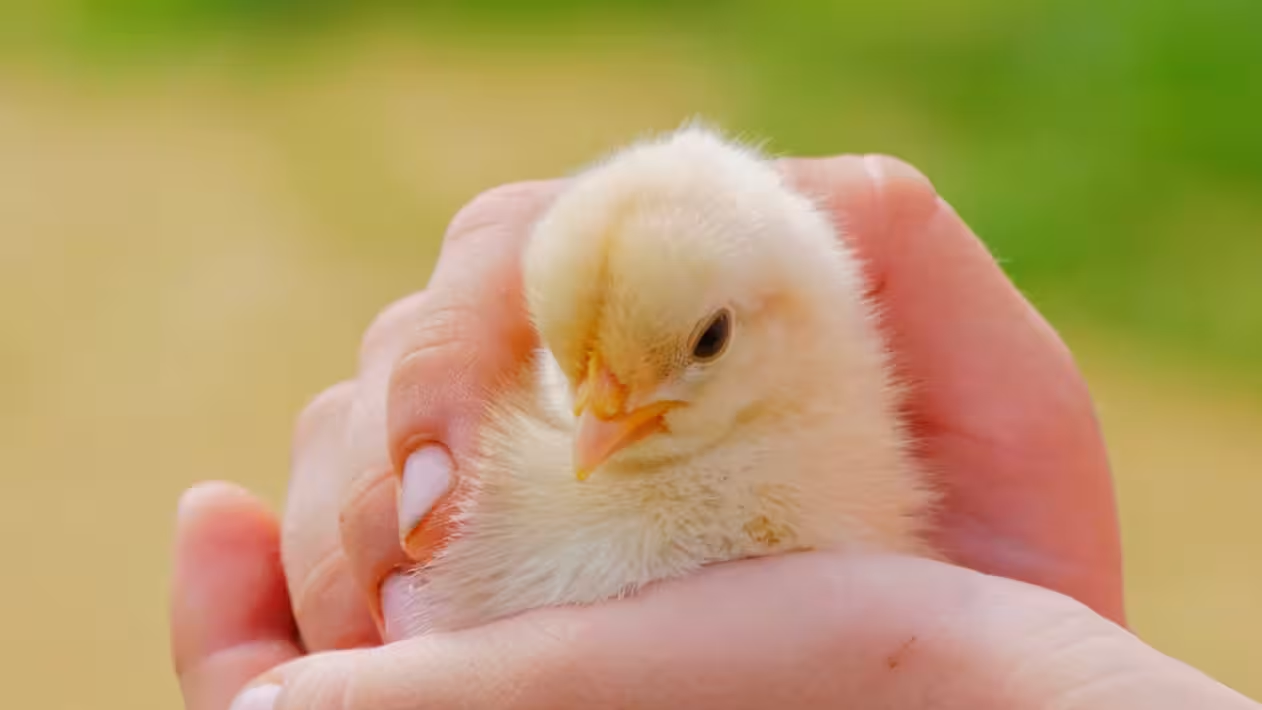
Nearly ten billion chickens are born in the US every year. But as a symbol of the holiday, the cultural depiction of Easter chicks is light years away from the actual experience of being a baby chick in the world. Whether they’re born as broilers (chickens raised for meat production) or layers (chickens raised for egg production), chicks experience a miserable range of horrors over their cut-short lives. Here are just a few things that await real chicks…
1. Male chicks are killed en masse
For egg farms, only one type of chick is useful: a female chick, who can grow up to lay eggs. Egg farms consider male chicks a waste, and they don’t want to pay for their food or upbringing, so they kill them by the billions—seven billion male chicks are killed globally every year. When they are just hours old, male chicks in the US are usually culled via maceration.
2. Their beaks may be mutilated
Even if a layer chick is born female and therefore kept alive, her luck doesn’t last very long. When she is only a few hours old, she is debeaked at a hatchery. That involves trimming portions of a chicken’s beak without anesthesia, and it’s thought to cause lifetime chronic pain. The official, ironic reasoning for doing so? Because chickens kept in close confinement will peck one another.
3. Chicks raised for meat grow rapidly and unnaturally
For chicks raised for meat, life isn’t any better. Even from the very beginning of their lives, these chicks don’t get to grow up slowly and naturally. Instead, they are bred to gain fast and unnatural weight as quickly as possible, in order to provide the most meat to consumers (and therefore profit to farms). And because factory farms don’t want to pay for a chick’s life any longer than they have to, this happens at an incredible speed. Broiler chickens are only five to six weeks old when they’re killed, and factory farms force them to put on an average of 60 grams every day. This comes with a myriad of health problems and chronic pain, including mobility problems and heart attacks.
4. They’re transported in frightening and dangerous ways
Chicks are born in a hatchery, and then quickly relocated to the farm where they’ll ‘grow up’; others are sent to hobby farmers, or those who want to raise backyard chickens. But factory farms transport these day-old chicks in horrifying circumstances: packed into boxes, thrown onto planes and trucks with dangerous temperatures, or even shipped as ‘perishable goods’ through the UPS. Millions of chicks die on these journeys, while the rest arrive injured or traumatized from their transport.
5. They’re separated from their mothers
There’s a strong mother-child bond between all animals—humans and chickens alike—and like us, hens and chicks want to stay together. A mother chicken can provide heat and protection, teach her chicks what is good to eat, and guide them to drink, rest, explore, perch, and roost. Left to their natural devices, mother chickens will usually look after her chicks until they are about six weeks old. But in a breeding facility, chicks are hatched by incubators, and will never know a mother’s care.
6. They have short, tragic lives
For the chicks who manage to make it through their infancy with all its manifold dangers, there’s not much to look forward to. Broiler chickens are forced to put on weight, in windowless sheds where they lie on their own feces suffering ammonia burns, and endure chronic pain until their frightening slaughterhouse death.
Layer chickens live in tiny cages, fighting with her fellow captives and suffering injuries. Factory farms force her and her sisters to lay up to 300 eggs a year. After two years, her body will be incapable of producing any more eggs, and she’ll be sent to the same slaughterhouse death.
Easter chicks are an emblem of the sun. But in a cruelly ironic twist, the vast majority of chicks in our world never see the sun. Instead, they are small and helpless captives in the vast, ugly machinery of factory farming, symbols of something they’ll never experience.
At The Humane League, we’re working to bring chickens back to the light. Join us as we fight for a better life for all baby chicks.


 Mikaella McInerney