


The Real Reason Eggs Got So Expensive (Hint: It’s Not Animal Welfare Laws)
What really sent eggs to six dollars a dozen? It wasn’t animal welfare laws. Data shows it was bird flu, inflation, and an industry that cashed in.


What really sent eggs to six dollars a dozen? It wasn’t animal welfare laws. Data shows it was bird flu, inflation, and an industry that cashed in.
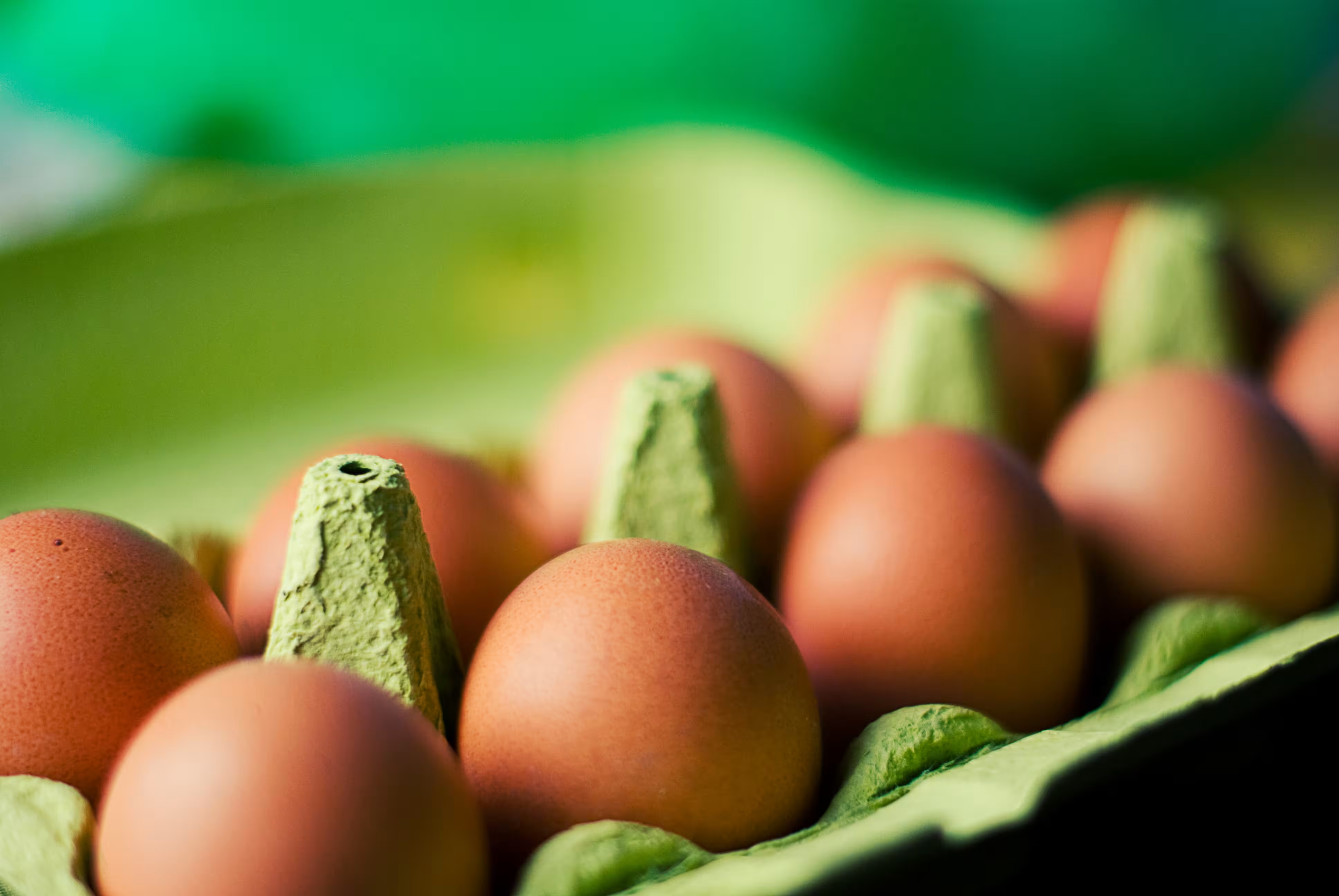


You may have heard the argument before: eggs got expensive because of animal welfare laws. When a dozen eggs shot toward six dollars, that’s the story that made the rounds. It's a good story. It's also wrong. Here’s why.
California had passed Proposition 12, banning the sale of eggs from caged hens, and the law took effect just as egg prices began to climb. The timing looked pretty damning, and the claim—that Prop 12 was to blame for soaring egg prices—traveled from industry white papers to op-eds to congressional testimony. But these claims failed to factor in the devastating impact of bird flu, widespread inflation that drove up grocery store prices in general, or the industry’s deliberate price gouging.
The Prop 12 effect is not that big
Let’s start by looking at what’s true. Cage-free production does cost more than caged egg production. Independent economists who study California’s egg rules consistently find a measurable impact on price. One look at Prop 12 after it took effect—drawing from USDA wholesale price data—estimated that the rule added somewhere between 25 and 73 cents to a dozen California eggs.
Now keep these price jumps in mind as you consider what actually happened at the grocery store.
| When | Price of a dozen large grade-A eggs (US city average) |
|---|---|
| February 2021 | $1.60 |
| February 2023 | $4.21 |
| February 2025 | $5.90 |
Between 2021 and 2025, that’s a jump of more than $4—four to twelve times the entire estimated effect of Prop 12. And there’s another important detail here: prices spiked everywhere, not just in California. From Iowa to Texas to Florida, the national average tracked upwards, matching the price pattern in California. To blame a California-specific rule, you’d have to believe that rule somehow reached into every other state’s grocery aisle at the same moment. But, of course, it didn’t. Whatever drove egg prices higher, it drove it nationwide.
What actually happened to egg prices
The real cause of higher egg prices isn’t a mystery. Beginning in 2022, the United States lived through the worst bird flu outbreak in its history.
- Highly pathogenic avian influenza tore through commercial chicken flocks. Since the outbreak began in 2022, it has cost the country more than 160 million birds in the egg industry alone—laying hens, young pullets, and birds used for breeding—before even counting the deaths of turkeys, ducks, and chickens raised for meat (rather than for eggs). Tens of millions of laying hens were culled in the first wave alone.
- Egg prices rose following the first reported outbreak. The Consumer Price Index, which tracks changes in the cost of living, showed that the cost of eggs increased 66.5% in the year after February 2022, when the first outbreak of bird flu was reported.
- You can’t refill a decimated barn overnight. Hatching chicks, raising pullets, and waiting for them to start laying takes months, so the shortage lingered long after bird flu headlines died down. Even the American Egg Board says fully repopulating a barn can take more than a year.
Agricultural economists from the University of Arkansas and Purdue have studied phenomena called “biological production lags,” which refer to “the time it takes for agricultural production systems to respond to changes in inputs, such as animal reproduction, plant growth, livestock weight gain, and egg production.” Disease outbreaks can, they argue, “directly and indirectly, lead to large consumer price changes, threatening food security and affordability.” When they looked into the bird flu outbreaks of 2022 and 2023, they found that the disease pushed weekly retail egg prices up an average of 5.3%. Because that effect accumulates over the months it takes to rebuild depopulated flocks, the price pressure dragged on long after the outbreak itself. The shock shows up starkly in the wholesale data: in November 2022, producer prices for eggs ran 280.9% above the year before, which represented the largest such jump since the government began tracking egg prices in 1938. It’s worth noting that Prop 12 had been on the books for months at that point, since the standards for egg-laying hens went into effect in January 2022.
On top of all this, bird flu didn’t act alone. USDA economists point to the disease, the war in Ukraine, and economy-wide inflation combining to drive 2022 grocery prices up 11.4%, the steepest annual jump in food-at-home costs since 1974. In other words, eggs weren’t a special case. They were one item in a food-price shock that hit products across every aisle of the supermarket.
Egg prices ended up falling with the law still in place
I want to return to that table I shared above, and add a row for 2026:
| When | Price of a dozen large grade-A eggs (US city average) |
|---|---|
| February 2021 | $1.60 |
| February 2023 | $4.21 |
| February 2025 | $5.90 |
| February 2026 | $2.50 |
The national average for egg prices dropped from a March 2025 peak of $6.23 to roughly $2.50 by early 2026, and Prop 12 never went anywhere. California’s law is still in effect. If a housing standard had caused the spike, the spike wouldn’t have evaporated while the standard stayed exactly the same. A regulation is a permanent cost, whereas a disease outbreak is a temporary shock. It was primarily the latter that explains the way egg prices actually behaved over the past few years.
So, when a supermarket points to high egg prices to explain why it can’t keep its promise to go cage-free, it’s hiding behind a temporary price spike to dodge an important public commitment. As 2025 deadlines arrived and went, Walmart and Kroger walked back or went quiet on their pledges. As Lewis Bollard points out, cage-free eggs run producers just 19 cents more per dozen than caged eggs, but Kroger is charging a $1 premium for cage-free eggs in states that don’t ban cages.
Now look at who came out ahead. While families rationed eggs, egg producers posted record profits. Shares of Cal-Maine, the largest US egg producer, practically doubled in 2024, and the top five companies control about half the national egg supply. Those profits were record enough to draw a federal price-fixing investigation. That’s the part the “blame egg prices on Prop 12” story conveniently leaves out: a disease crisis sent prices soaring, the companies selling the eggs profited from the squeeze, and some used the same crisis as cover to abandon their animal welfare commitments.
The myth has been durable enough to keep spreading. A 2025 review in a peer-reviewed health journal, surveying how families coped with the price spike, attributed California’s egg price increases to Proposition 12. It has also moved into courts. The Department of Justice sued California in 2025 and Michigan in 2026, arguing in both that cage-free laws raised prices nationwide, with no mention of the historic bird flu outbreak.
The reality is that what raised egg prices was an acute, nationwide, disease-driven shock, layered on top of broad inflation and, in many cases, a healthy dose of corporate opportunism. So the next time you hear that animal welfare made your eggs expensive, remember what the data show: bird flu, inflation, and corporate profiteering are to blame, not animal welfare laws.
More Like This

Egg Industry Profits Soar at Cal-Maine While Consumers Pay The Price
As families struggle with record-high egg prices, Cal-Maine Foods is raking in billions—exposing a troubling reality about who really benefits from our broken food system.


BY THE NUMBERS, NOT THE NARRATIVE
New research challenges the idea that people will sacrifice animal welfare in the name of sustainability.
