When Kroger Takes Over Giant Eagle, Will It Raise Its Own Standards—or Drag Down Giant Eagle’s?
Concerned shoppers are anxiously waiting to see what the takeover will mean for the grocers’ commitments to selling cage-free eggs.
 Jenny Davis-Boyd


Concerned shoppers are anxiously waiting to see what the takeover will mean for the grocers’ commitments to selling cage-free eggs.
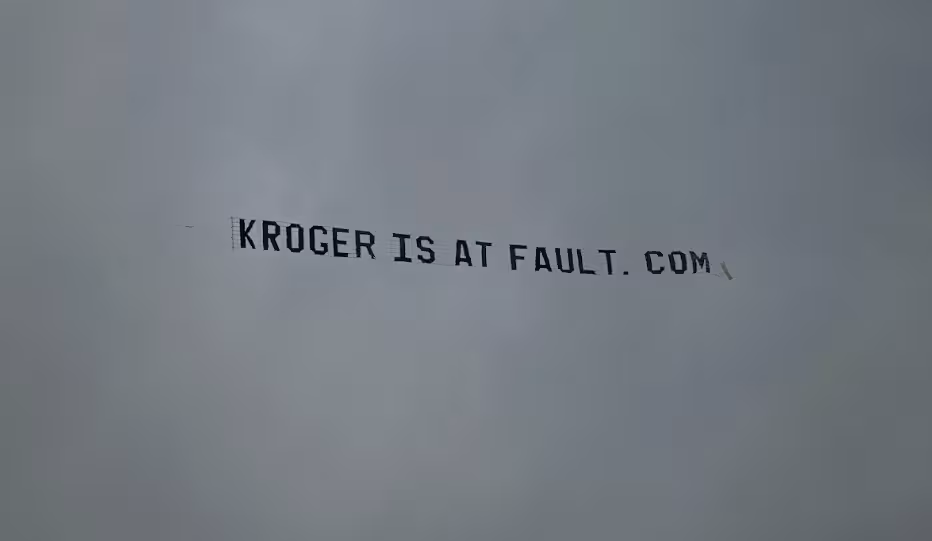


Kroger is paying $1.65 billion to take over Giant Eagle. Yes, that Kroger. The same grocery giant that promised customers it would stop selling eggs from caged hens—then walked away from that promise as the deadline got close.
So Giant Eagle shoppers have a right to ask: Will Kroger raise its own standards—or lower Giant Eagle’s?
A hometown grocer meets a corporate giant
Giant Eagle was founded in Pittsburgh, in 1931. Its first supermarket opened on Brownsville Road, in 1936. Today it runs nearly 200 supermarkets and standalone pharmacies across Pennsylvania, Ohio, West Virginia, Maryland, and Indiana, with headquarters in Cranberry Township, near Pittsburgh.
Kroger’s billion-dollar takeover is set to close in 2027, pending regulatory scrutiny. Giant Eagle says it will keep its name, its Pennsylvania headquarters, and its customer-loyalty program. Giant Eagle also says its executives are expected to stay on. Kroger has said it has “no plans to close stores or eliminate frontline jobs,” but does “anticipate a limited number of store divestitures.”
Yet shoppers are already wondering what this will mean for the local values and standards.
In a letter to the Pittsburgh Post-Gazette, in October, Carol Whaley of Upper Lawrenceville wrote, “Giant Eagle is part of our hometown and who we are.” She argued that shoppers “deserve a grocery store that lives up to those values: one that puts customers first.”
Kroger’s broken promise to hens
In 2016, Kroger said growing customer demand prompted it to set a goal to sell eggs only from cage-free hens by the end of 2025. By 2022, it had changed its tune. According to its animal-welfare policy that year, “We do not expect to achieve our 2025 goal [of 100% cage-free eggs].”
Kroger’s new cage-free target? About 70% of the eggs it sells, by 2030. Anything beyond that, the company said, would depend “on customer engagement.” After officially missing its 2025 deadline, Kroger now refuses to put a new 100% cage-free plan in place.
Instead, Kroger is blaming its customers for its own broken promise.
Meanwhile, other major retailers—including Amazon, Costco, CVS, Walgreens, Target, and Ahold Delhaize—have already fulfilled, or are making progress toward fulfilling, their 100% cage-free egg commitments. Overall, nearly half the US egg industry is now cage-free. The United Egg Producers trade group reported that 47% of US flocks were cage-free in 2025. In 2010, that figure was just 5%.
Kroger’s role in this is significant. In the US, the only other grocery chain that sells more eggs from caged hens is Walmart.
What cages mean for the hens inside them
Hens raised for eggs on factory farms are often crammed into barren wire battery cages. Each bird gets less space than a single letter-sized sheet of paper—not enough room to even fully spread her wings. As many as 10 hens can be wedged into a cage the size of a microwave.
Kroger’s defense? Its egg suppliers provide “food, water and air.” That’s the bar.
Carol Whaley has worked in animal rescue with hens who spent most of their lives in cages. In her letter, she described what she saw: “infected feet, emaciation, fragile bones, severed beaks and extensive feather loss.”
Each of those hens was an individual who deserved far more than just food, water, and air.
Shoppers don’t trust a company that breaks its word
Kroger’s customers have noticed the company’s backtracking. In a national poll by Bedrock Polling, released by Humane World for Animals, 83% of Kroger shoppers with a clear opinion reacted negatively to the idea of “a store that failed to keep a promise to stop selling eggs from caged hens, citing anger, disappointment, distrust and ethical concerns.”
In Cleveland, Courtney Wagner put it plainly in a letter originally published in the Akron Beacon Journal: “Promises are promises; we all know you must not make them if you aren’t intending to keep them.” She added that before Kroger takes over local Giant Eagle stores, “they need to finally stop caging innocent chickens.”
This takeover of Giant Eagle shows where Kroger’s priorities lie. It wants to reduce competition and extract more profit from customers while extreme animal cruelty continues in its supply chain. Kroger should fix its broken promises instead of trying to buy up its competitors.
What’s at stake for Giant Eagle
All Giant Eagle in-house brands sell only cage-free shell, liquid, and hardboiled eggs. That’s real progress for hens.
Now that progress is in the hands of a company that walked away from its own promise. What happens to Giant Eagle’s commitments to animals once the deal with Kroger is done?
Customers deserve to know whether those promises will survive the takeover.
Call to action: Don’t let Kroger drag Giant Eagle down
Public pressure works because companies care what their customers think. That’s how corporate accountability campaigns have pushed companies to make and keep promises to animals. Kroger made its promise in the first place because customers asked for it.
Now you can make sure it doesn’t get forgotten. Your voice can make sure Kroger’s executives hear that, loud and clear, before the deal closes next year.
Giant Eagle customers expect—and deserve—better than Kroger’s broken promises.
Take a minute today and tell Giant Eagle not to let Kroger lower its standards. Every message adds pressure and brings hens one step closer to getting out of cages.
More Like This
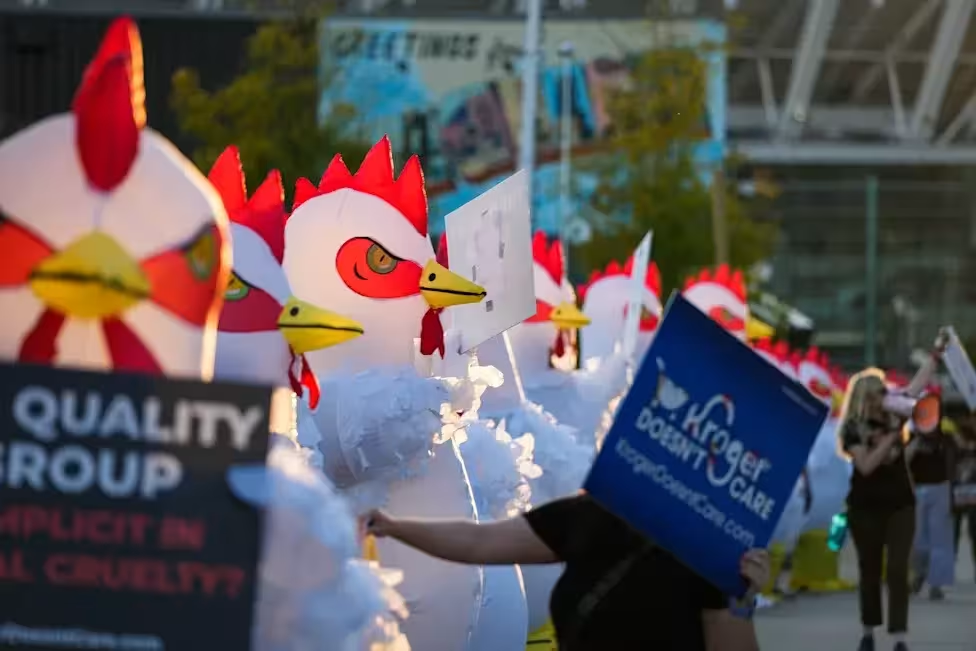
How Kroger Chickened Out in Cincinnati
An inflatable flock of chickens, multiple days of media coverage, corporate executives visibly sweating—how creative resistance in downtown Cincinnati forced a grocery giant to face its broken promises.


Grocery Giants Are Making Good On Their Promises To Hens
Two of America’s biggest grocers are making real progress on their promises to end animal cruelty. Others should take note.


