How do eggs hatch on farms and in nature?
Eggs are a staple in many US homes, but how much do you really know about where they come from?


Eggs are a staple in many US homes, but how much do you really know about where they come from?
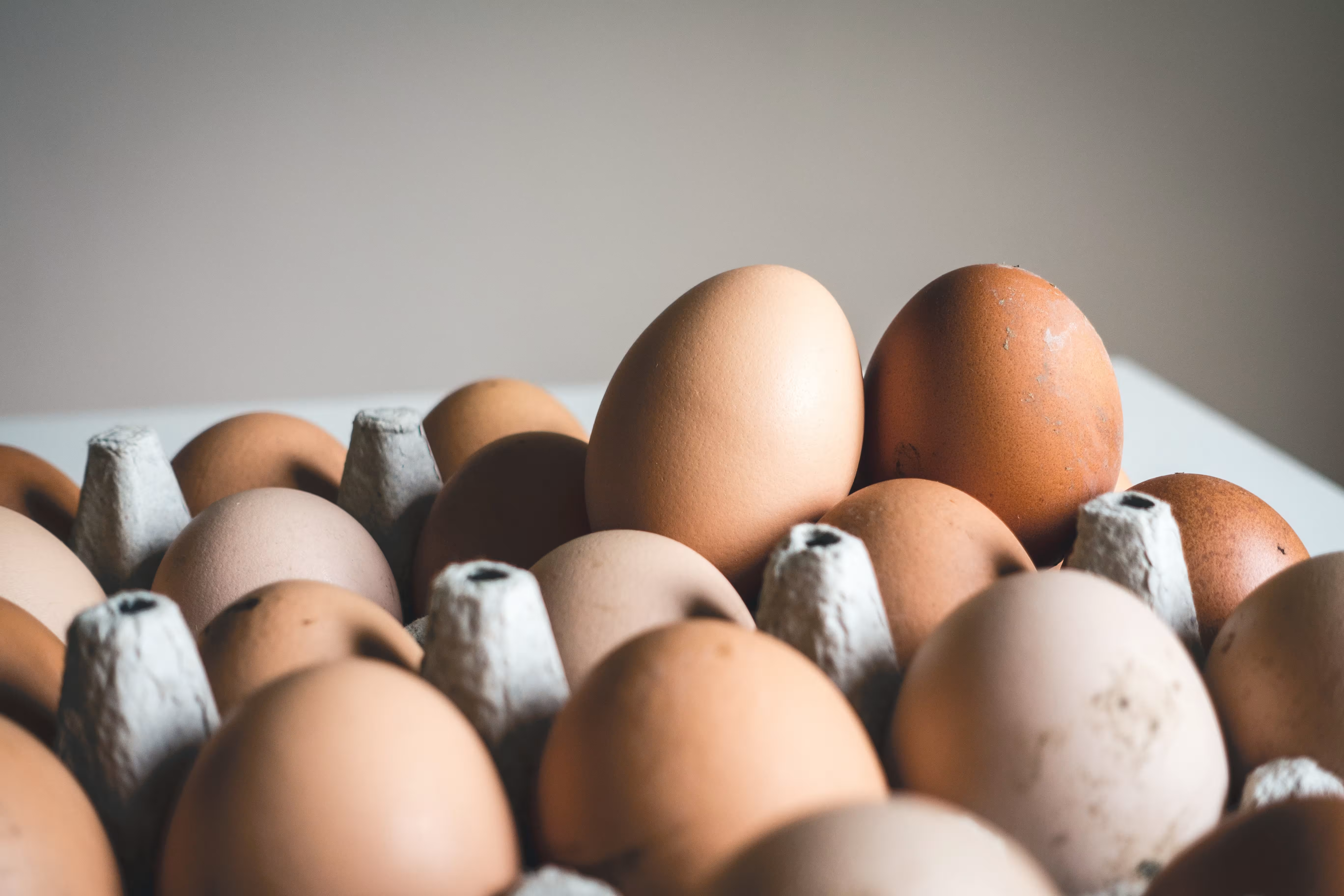


Chicks are known to imprint upon their mothers, meaning that soon after hatching in nature, they will follow her and respond to her calls. But despite that close bond in nature, chickens on factory farms will sadly never meet their mothers.
Instead, most baby birds are hatched inside incubator systems with controlled environments, housing hundreds, or even thousands, of other eggs. Incubators, and no mothers in sight, are just some of the many facts of egg farming that impacts the welfare of these sensitive birds.

Here’s what you need to know about how eggs hatch—naturally, and on farms.
What is hatching?
Hatching takes place when chicks crack their way out of fertilized eggs, in which they have developed. While egg shells may seem delicate and easily breakable, for the chicks who have to crack them open from the inside, the process is tough, often taking hours.
Thankfully, chicks are uniquely suited to the task, and have a special tooth called an egg tooth that helps them break through the shell. Once they’re free, the tooth falls off after a few days.
How do hens hatch their eggs?
While chicks perform the tough job of hatching out of their eggs, in nature, they wouldn’t make it out of the shell without the care of their mother hens. From the day they lay their eggs, hens are dedicated parents, sitting on them for hours to keep them warm. Their presence is an important bonding experience between hen and chick, as the two start communicating before the egg even hatches. When danger is around, hens will make warning sounds, acclimating the unhatched chicks so that by the time they’re hatched, the chicks know to respond when she warns of danger.
Mother hens make sure their eggs remain healthy by sitting on them to maintain a temperature of around 100℉, splashing them with water to ensure they don’t get too dry, and turning them frequently.
On commercial farms, hens don’t get to hatch their own eggs. Instead, the unhatched eggs are taken and placed into an incubator, where they’re turned and warmed by machines until they eventually hatch.
What are the stages of hatching?
Whether hatched in an incubator or by their mother, the development that takes place within the egg is impressive. In just 21 days, a clump of cells develops into a chick able to fight their way out of the shell and into the world.
Though chicks develop from embryos to fully fledged baby birds inside of eggs quite quickly, the process is complicated, as birds form organs, grow feathers, and develop all the other parts necessary for life outside their shell.
Setting eggs (Day 1)
A setter hen—also called a broody hen—is one who wants to hatch her eggs. A hen can decide she wants to hatch her eggs, becoming protective of them whether they’ve been fertilized or not. On factory farms, eggs are almost always taken away from mother birds, regardless of whether or not she wants to hatch them herself.
Early development (Days 1-6)
When laid, an egg contains little more than a clump of identical cells. Over the course of a few days, those cells change to become essential organs. By hour 44, the baby bird’s heart starts to beat, and their mouth, tongue, and the slits in their beak are visible.
Embryo starts to resemble a bird (Days 7-14)
Around day seven, chicks develop digits on their feet, and their chest cavity closes up around their heart. Feathers become visible around day 10 and, by the two-week mark, the birds start to move into hatching position.
Chick prepares to hatch (Days 15-20)
Between days 15 and 20, chicks start breathing with their lungs. At the end of this phase, the chick is in hatching position and ready to emerge.
Hatching (Day 21)
After only three weeks of development, chicks use their egg tooth to crack the shell and emerge into the world. Once hatched, chicks are wet from the fluid within the egg, but quickly dry into the fluffy, feathered babies we know.
Post-hatching (Day 21 onward)
Unfortunately, for the vast majority of chicks hatched into the world, they’ll never meet their mother. Female chicks destined to become layers are instead likely to spend their days on factory farms, while male chicks are likely to be killed upon hatching. They are considered useless by the egg industry, as male chicks can’t lay eggs.
How does temperature affect the hatching of eggs?
Eggs are highly sensitive to temperature. To develop, eggs need to be kept between about 98.6-102.2℉. Higher temperatures will kill the embryo, while lower temperatures will keep them from developing. Embryos can be delayed for about a week by keeping eggs in cooler temperatures.
What are the signs that an egg is about to hatch?
One of the ways of determining if an egg is about to hatch is waiting for the first crack, called a pip. Once the chick has made that first crack, they should emerge fully within 12 hours.
How do eggs hatch in an incubator?
On farms, a single industrial incubator can house thousands of eggs at a time. Inside the incubator, conditions are controlled to keep temperature and humidity at ideal levels for hatching. Some incubators will also simulate the mother hen by automatically turning the eggs.
Unfortunately, mishandling of eggs is common on farms. Chicks can suffocate in incubators due to a lack of oxygen flow as they exert themselves trying to escape their eggs. Chicks also often suffer from incubator malfunction or mismanagement, due to humidity being too high or too low. Too little humidity can dry out the egg’s membranes, which stick to the chick and keep them from turning to hatch. Too much humidity can drown the baby birds.
What happens when chicks hatch without a mother?
When chickens are hatched without their mothers, they miss out on the valuable skills she would have imparted, like what to peck, when and where to sleep, and how to respond to threats.
Not having access to their mothers upon hatching can have significant consequences for chicks long-term. Chicks hatched in incubators, for example, are more timid and more likely to develop problem behaviors like feather pecking.
The bottom line
Though often considered a simple and natural process, hatching eggs is actually very complex. Unfortunately, most chicks will never meet their mothers when they emerge. Instead, they’ll be greeted by an impersonal machine and thousands of other chicks all cracking their shells.
While leaving eggs off your plate is a surefire way to avoid supporting an exploitative industry, we can also make a difference in the lives of millions of chickens by advocating for higher welfare standards, such as cage-free guarantees, and working toward the end of intensive factory farming practices.
If you’d like to join our campaign to get cages for laying hens banned in the US, join us.
More Like This
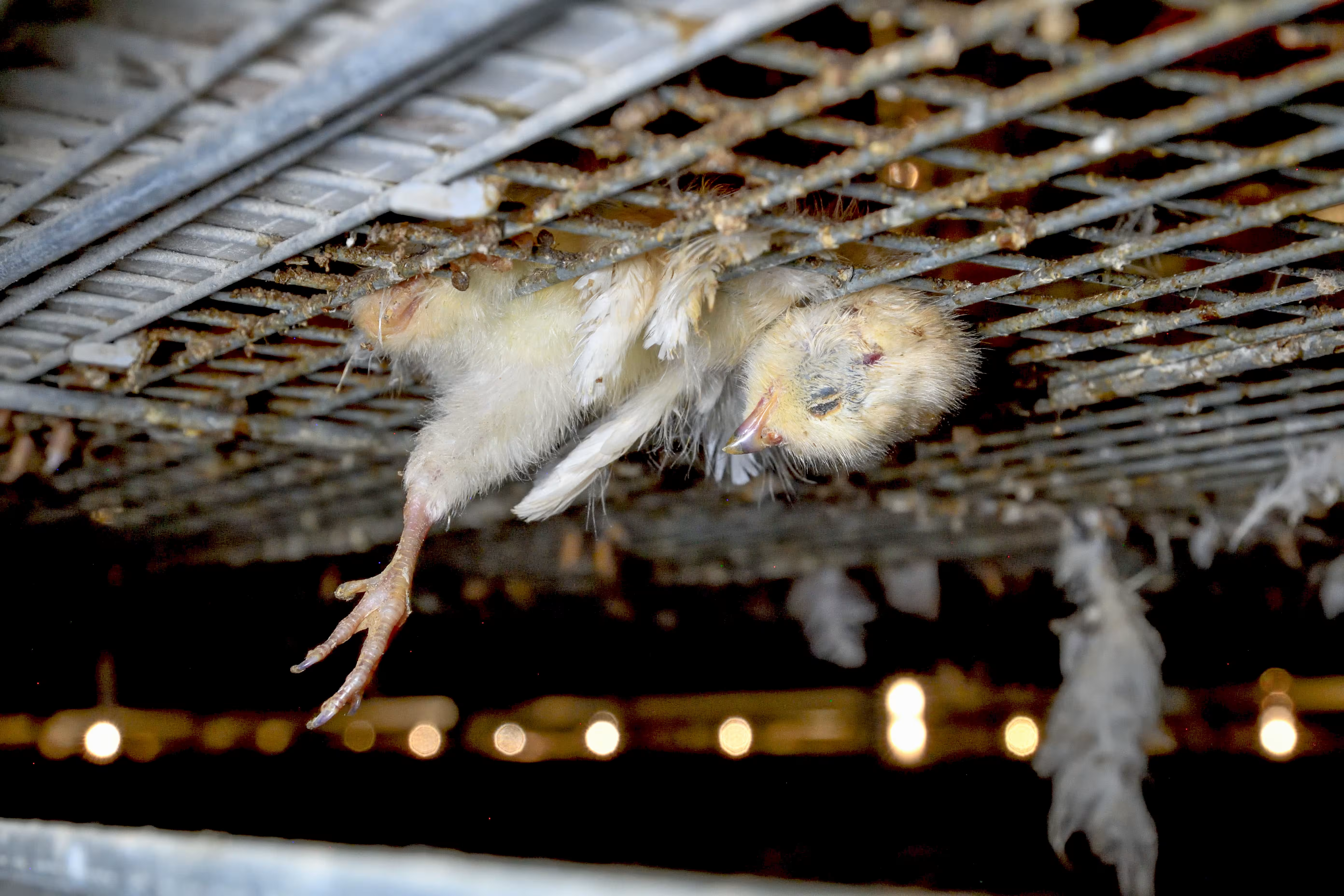
Why eggs aren’t cruelty free: The shocking truth behind the egg industry
The egg industry has a dark secret: it exploits, abuses, and kills millions of hens every single year.


How Many Eggs Does a Chicken Lay a Day?
A hen’s closest wild ancestor, the red junglefowl, will produce 10-15 eggs in a year. A commercial egg-laying hen on a factory farm can produce around 300.


