World Bank’s IFC Drops $20M Agronorte Loan in Brazil
Indigenous leaders and 100+ groups just got the World Bank’s lending arm to drop a $20 million feed mill loan.
 Hannah Truxell


Indigenous leaders and 100+ groups just got the World Bank’s lending arm to drop a $20 million feed mill loan.
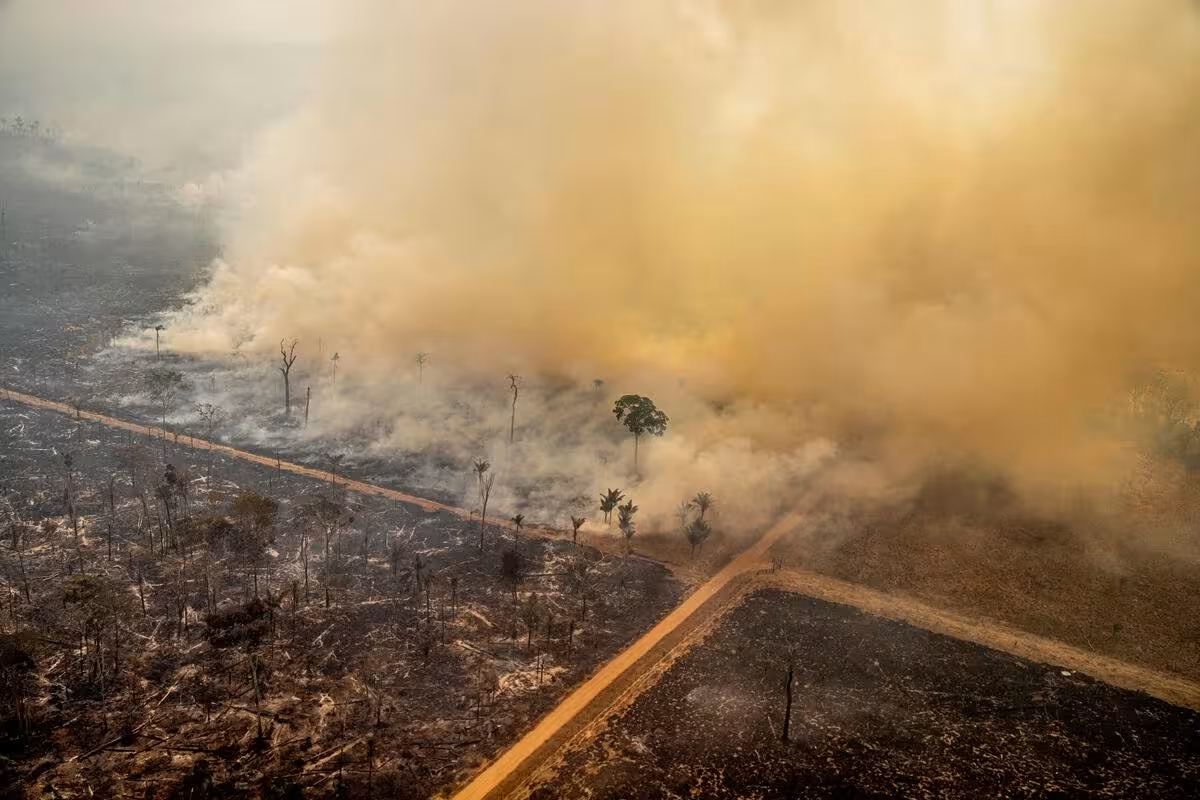


A $20 million loan that could have fueled factory farming and deforestation in Brazil is off the table.
It happened because Indigenous leaders spoke up, and people around the world stood with them. Here’s what happened, why it matters for animals, and what comes next.
The International Finance Corporation (IFC), the World Bank’s private sector arm, has walked away from its proposed $20 million loan to Grupo Agronorte, a Brazilian company that mills soy for livestock feed. On October 20, Inside Climate News broke the story.
This win belongs first to the Apinajé, an Indigenous people defending their territories, water, and ways of life. More than 100 organizations worldwide backed them. We were glad to add our name to the coalition’s letter and email key decision makers. But we were one small voice in a much bigger, global chorus, and the credit goes to the Apinajé and the partners who led this fight.
What happened at the World Bank
The IFC is the world’s largest development finance institution focused on private sector investments in lower-income countries. Put simply, it’s a public bank that lends money to companies in the name of development. It announced the Agronorte loan in March.
In May, more than 100 advocacy and Indigenous groups wrote to the IFC asking it to cancel the loan. The Stop Financing Factory Farming coalition organized the letter. The coalition now says the IFC won't go forward. The IFC didn’t answer questions from reporters, but it has removed the Agronorte loan from its disclosure portal.
Why the Apinajé fought back
Agronorte’s operation sits more than 1,000 miles south of Apinajé territory. Groups argued it would still ramp up pressure for soy production in their region. Agronorte's founder and majority owner faces a federal lawsuit in Brazil accusing him and his associates of illegally clearing nearly 5,000 acres of rainforest bordering Indigenous lands.
“The area he claims, which overlaps with our territory, is now completely deforested,” an Apinajé chief said in a statement shared by the coalition. The chief withheld their name because of security concerns. “We were deeply concerned that, if he obtained this funding, he would continue to deforest the area around our territory without consulting us.”
The letter also pointed out that the IFC had acknowledged Agronorte has no systems in place to make sure the soy it processes isn't grown on illegally deforested land. “Funding a company involved in land conflicts and accused of illegal deforestation is not aligned with IFC policies,” the groups wrote.
What this means for animals
Soybean plantations have spread across the Amazon and the neighboring Cerrado grasslands, largely to meet growing global demand for livestock feed. Most of what Agronorte would produce is animal feed for export. Feed is the fuel factory farms run on. That's why it matters what goes into animal feed and where it comes from.
The money behind these systems is huge. The World Bank Group poured about $1.4 billion into livestock production in developing countries between 2023 and 2024. The IFC approved 38 industrial livestock investments worth nearly $2 billion between 2020 and 2025, according to a Stop Financing Factory Farming analysis. Every dollar like that helps industrial agriculture expand, and behind those numbers are living, feeling animals. Stopping one loan won't end that. But it shows public money doesn’t have to flow toward factory farming’s cruelty.
Proof that pressure works
“I do think the pressure is working,” said Ashley Schaeffer Yildiz of Friends of the Earth U.S., a founding member of the coalition.
There’s a track record. In July of last year, the European Bank for Reconstruction and Development canceled a proposed €40 million investment that would have financed up to 600 new Burger King and Popeyes outlets across Poland, Romania, and the Czech Republic. In 2022, IDB Invest withdrew a $200 million loan package to Brazilian meatpacking company Marfrig. In 2009, the IFC withdrew a $90 million loan to Brazilian meatpacking company Bertin after environmental groups found the company had sourced cattle from illegally deforested parts of the Amazon.
What happens next
The fight isn’t over. The Apinajé still face threats to their territories and ways of life, and other financiers could still pursue the project. The coalition is also watching other proposed IFC loans. These include $150 million to New Hope Singapore to expand animal feed production across Vietnam, Egypt, Bangladesh, Cambodia, and Nepal, and $100 million to Brazil's Agrícola Alvorada.
You can help the Apinajé’s story travel further. Watch and share the coalition’s victory video to show what people can do together.
Take on corporate greed today
This win proves something we see again and again. When people stand together, even the biggest players in industrial animal agriculture have to listen. Agribusiness puts profit first in plenty of places, including at your grocery store. Learn why eggs got so expensive, then add your voice in one minute: stop price gouging.
More Like This

Egg Industry Profits Soar at Cal-Maine While Consumers Pay The Price
As families struggle with record-high egg prices, Cal-Maine Foods is raking in billions—exposing a troubling reality about who really benefits from our broken food system.

The Real Reason Eggs Got So Expensive (Hint: It’s Not Animal Welfare Laws)
What really sent eggs to six dollars a dozen? It wasn’t animal welfare laws. Data shows it was bird flu, inflation, and an industry that cashed in.


