Hannah Surowinski


Kewpie has taken a major step. What happens next could shape the future for hens across Japan’s vast egg industry.
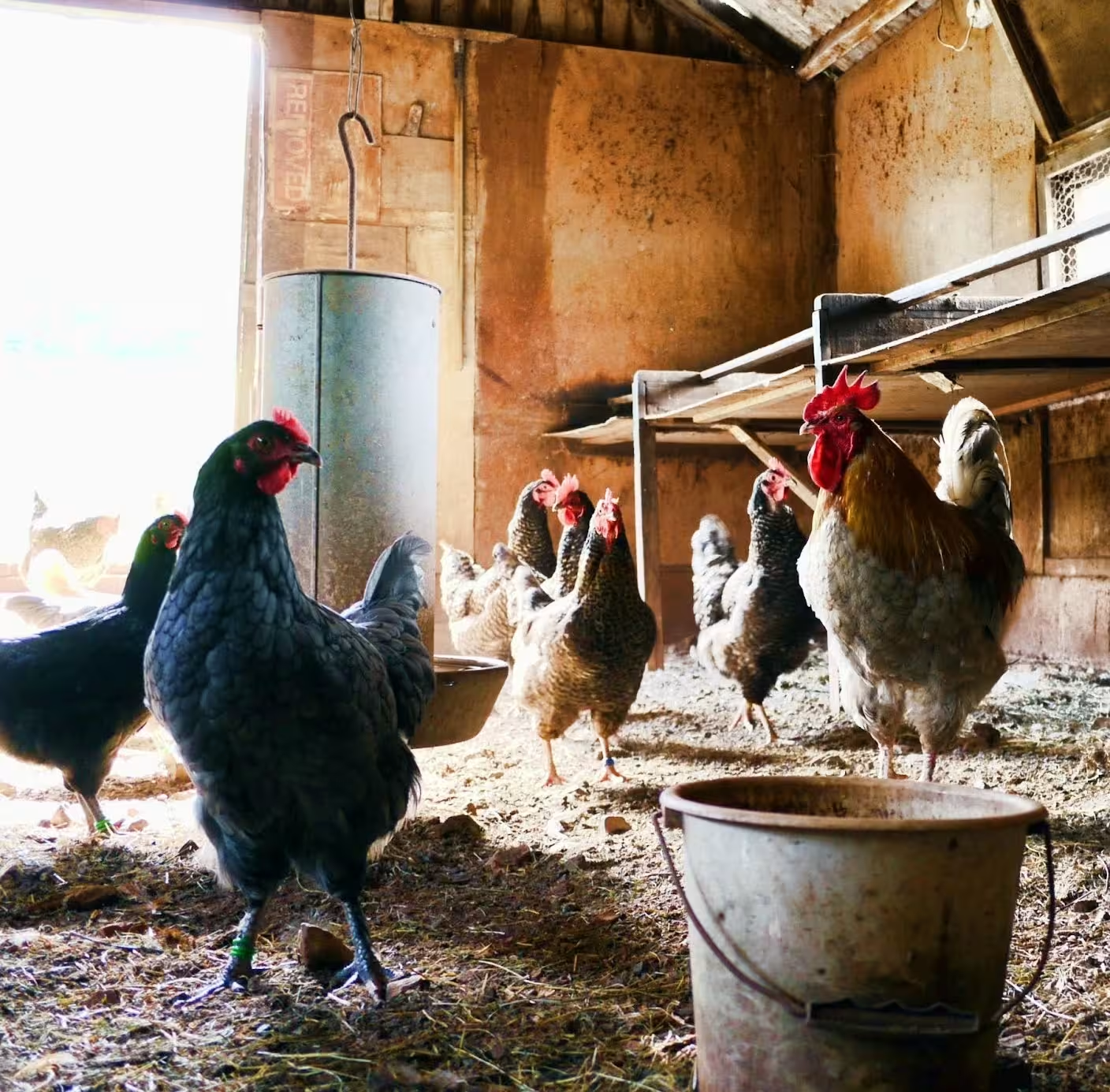
The decisions made by a handful of companies can shape life for millions of hens in Japan. But recent developments from Kewpie suggest change may finally be gaining ground.
Today, around 95% of eggs in Japan still come from hens confined in cages, each bird living in a space smaller than a sheet of paper. In a market this large, even small shifts can affect enormous numbers of birds.
One company already playing a major role is Kewpie Corporation, whose mayonnaise products reach shelves around the world.
Kewpie reaches a major milestone
Kewpie recently confirmed it has reached 100% cage-free across Europe and the United States, including its new production facility in Tennessee.
The company also reaffirmed the next phase of its cage-free plans, building on last year’s progress to expand its impact. It is working toward 10% cage-free eggs globally by 2027 and 20% cage-free eggs used in mayonnaise produced in Japan.
Kewpie outlined several steps to reach these goals:
- Expanding cage-free farms in Japan: working with egg farmers to raise more hens outside cages, where they have room to move
- Helping businesses make the switch: encouraging restaurants and grocery stores to choose cage-free eggs, as more customers expect better treatment of animals
- Looking beyond Japan: connecting with farmers in Thailand, Malaysia, and Vietnam to help increase the supply of cage-free eggs
Kewpie has already begun visiting producers and working with trusted industry experts to find ways to expand cage-free supply.
For hens, changes like these could open the door to a life with more freedom.
A breakthrough years in the making
For more than five years, our members across the Open Wing Alliance—and supporters like you—urged Kewpie to move away from cages.
Kewpie was one of the movement’s most difficult targets—and one of the most important. The company uses an estimated 10% of all eggs produced in Japan, giving it enormous influence over the egg industry.
For a long time, Kewpie resisted calls to adopt cage-free policies. But sustained pressure helped shift the conversation. When a company with Kewpie’s reach begins moving away from cages, it sends a powerful signal across the industry.
It can influence what farmers invest in, what suppliers prioritize, and what other food companies believe is possible. Asia is home to most of the world’s caged hens— and shifts from companies like Kewpie can carry influence far beyond the region..
What Japan is showing us
More than 180 million hens are raised for eggs in Japan, yet only about 1–3% are cage-free—one of the lowest rates among developed economies.
When companies with enormous egg demand begin changing how they source eggs, the effects can travel across the industry. Suppliers pay attention. Producers begin exploring new systems. Other companies take notice.
That’s why developments involving companies like Kewpie are significant. Progress from large food companies can help shift expectations across the market—bringing the industry closer to a future where cages are no longer the norm.
And that progress happens when people like you expect better.
If you want to help keep it going, you can join the Fast Action Network, where supporters help hold companies accountable.