82 groups. 72 countries. One movement working to end cages for hens. Explore the progress, courage, and collective power that shaped 2025.
Open Wing Alliance in Poland
Share
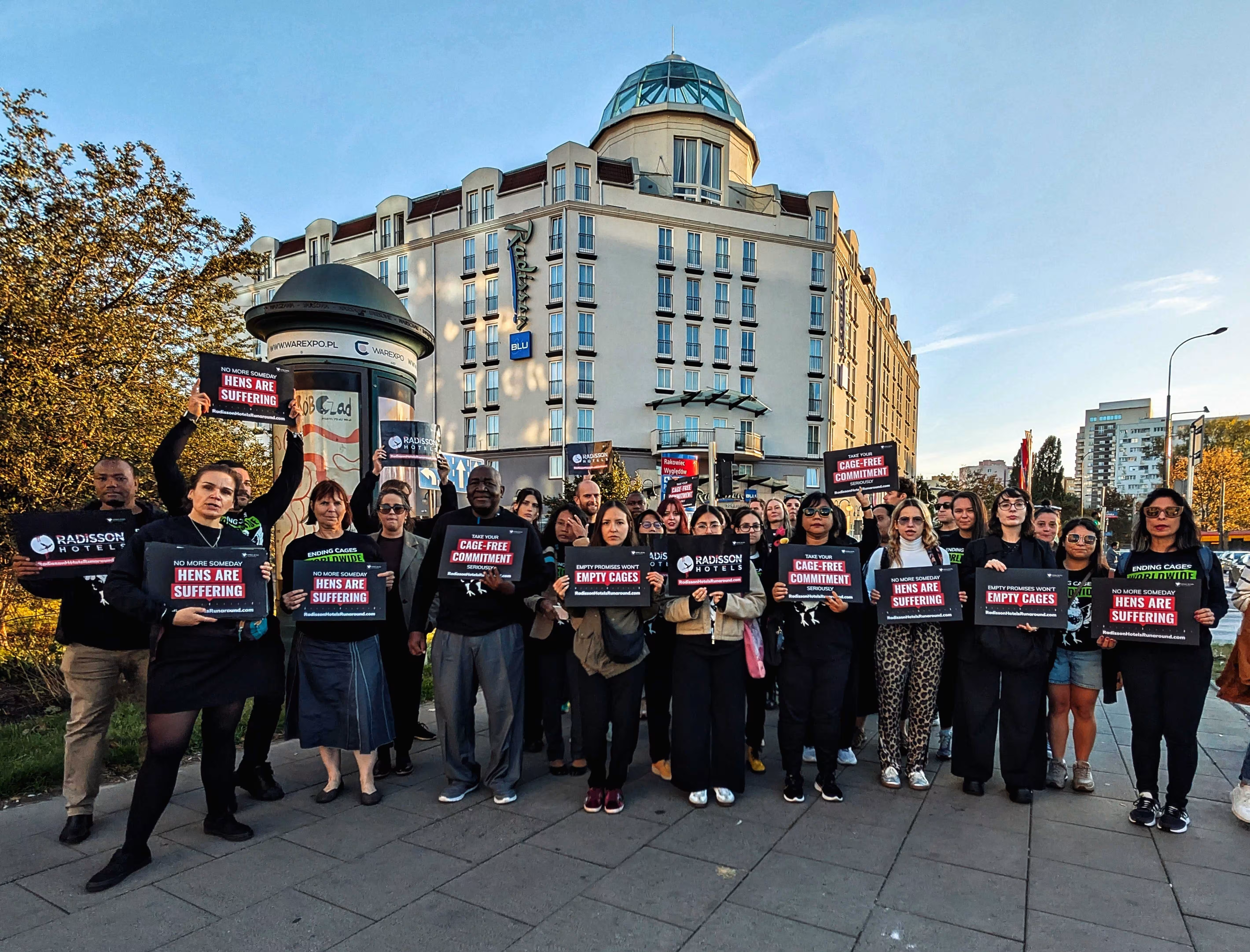
Megaphones cut through the city noise as activists from Colombia to Tanzania stood shoulder-to-shoulder beneath the Radisson sign. No matter the language, the message landed the same: end cages now.
If you wanted a snapshot of the year, it was right there on that sidewalk—determination, shared purpose, and a refusal to let cage-free commitments fade away.
In 2025, the Open Wing Alliance (OWA) showed what’s possible when people take action. Bringing together 82 groups across 72 countries, the Open Wing Alliance is an unstoppable force for change, pushing the world’s most powerful companies to do better for millions of hens trapped in battery cages.
OWA members organized campaigns to pressure global companies, used research to drive change, trained new advocates, and strengthened the movement. Every time a company makes or follows through on a cage-free commitment, more animals experience relief from extreme confinement—finally getting the chance to stand on solid ground, spread their wings, and move around freely. Multiplied across millions of hens, the impact is unmistakable.
Because of OWA groups, 2025 delivered major milestones for hens:
216 new cage-free policies are now secured, helping egg-laying hens out of cages
18 new policies have been implemented to improve the lives of chickens raised for meat
92% of commitments with deadlines through 2024 have been fulfilled
OWA members showed up this year—trying new approaches, building skills, and supporting one another across regions.
Highlights from the year
Open Wing Alliance advocates push companies to commit—and keep following up so change actually happens for animals. Advocates took action to hold companies accountable to their animal welfare commitments—bringing sustained pressure directly to decision-makers.
And for many, accountability didn’t stay in inboxes. It showed up through public pressure, tracking progress, and asking companies to explain their progress when updates stalled or disappeared.
Innovating for animals
Rather than launching just a couple of resource-intensive campaigns, groups experimented with pressuring many companies at once using campaign-style actions. This time, groups paired that approach with clear escalation plans, allowing pressure to build.
The response was immediate. Six companies updated policies, shared timelines, or restarted cage-free plans that had stalled. As Elly of Animal Friends Jogja noted, transparency like this “should be the standard—because it directly affects the welfare of laying hens that have been neglected.”
Progress from REWE Group
REWE Group is one of Europe’s largest food retailers, with a supply chain that affects millions of hens each year. Despite the company’s cage-free commitment, months passed without updates, meaning more time in cages for hens.
OWA groups didn’t let it slide. Advocates across Europe and beyond kept pressing—sending follow-ups, raising the issue publicly, and asking the company for accountability.
Eleven days after REWE was named in the Fair and Fowl report, the company responded. It reinstated its cage-free commitment and shared an update showing 83% progress worldwide. That shift affects an estimated 7 million hens each year—millions now closer to living with space to move and stretch their wings.
Accountability from Best Western Hotels & Resorts
For years, Best Western had a cage-free promise on the books. And yet, the company had no public updates to show for it. So advocates kept showing up—dressed for the elements, megaphones in hand—making their presence for hens known outside hotel properties. They asked the same straightforward question again and again: what’s happening with the hens?
Best Western’s commitment dates back to 2019, with a 2025 deadline approaching. As other hotel chains began sharing progress, OWA members kept the spotlight on Best Western—comparing timelines and pushing for transparency that showed whether conditions were changing.
In 2025, the pressure finally broke through. Best Western reported that about 70% of its global egg supply is now cage-free and agreed to begin a pilot credit purchase in early 2026.
It’s movement, driven by people pushing companies to treat animals better. For hens still waiting on the other side of that remaining 30%, what comes next matters just as much.
Reports that made progress visible
Across the Alliance, advocates relied on shared data to see which companies were following through, which were falling behind, and where pressure could make the biggest difference for hens. In a movement spanning dozens of countries, that clarity keeps everyone working from the same playbook.
Each year, the OWA releases reports evaluating companies on their cage-free progress worldwide. These reports turn promises into measurable action—giving advocates clear facts to bring into meetings, campaigns, and conversations, grounded in what companies are truly doing.
OWA Fulfillment Report
This year’s OWA Fulfillment Report shared something worth celebrating: 92% of cage-free commitments with deadlines of 2024 or earlier were fulfilled. That level of follow-through signals huge momentum, with companies delivering changes that impact millions of hens.
The report also showed how progress is playing out across regions, highlighting where companies have completed their transitions. It shows where implementation is underway and where commitments are still lagging.
OWA Fair and Fowl Report
The annual Fair and Fowl report focused on a different question: which global companies are being transparent about their cage-free commitments, and which are not? While the Fulfillment Report tracks whether deadlines are being met, Fair and Fowl focuses on accountability when progress stalls or updates disappear.
Others were still falling short for hens. Radisson Hotel Group, Puratos, Alsea, Couche-Tard, and Newrest were among the companies named. With direct outreach and oversight, the report helped secure 16 wins—moments where ownership led to change for birds who’ve waited long enough.
Empowering advocates worldwide
Alongside campaigns, 2025 was about strengthening the people who make ending cages possible. Across the Alliance, advocates spent the year learning together through trainings, mentorship, and hands-on guidance. Local groups gained the confidence and tools to take on major egg buyers in their own regions. And of course, to keep going when things got tough.
Webinars
Some of the most important progress this year happened live, in real time. Advocates logged on from wherever they were—kitchen tables, shared offices, late at night after long days of pushing against corporate giants. For many, it meant seeing faces they’d only known through emails, or meeting someone new who had the same questions. Everyone was there for the same reason: hens are still suffering in cages.
Over the year, OWA hosted 13 webinars, along with 19 campaign chats and 21 action parties. From polished presentations to working sessions, people talked through campaigns that felt stuck, practiced conversations they were about to have with companies, and shared what helped move things forward.
Eggstimation Training
Two cohorts joined the five-week Eggstimation program, bringing in groups from Latin America and Asia. Together, they learned how to map corporate egg use in their regions—a practical step that helps advocates understand which companies have the biggest footprint and where a cage-free push can have the strongest impact.
That data now feeds directly into how OWA members plan and prioritize strategy. It helps groups move major domestic egg buyers toward choosing a more humane life for hens.
In-Person Corporate Engagement Training
In 2025, OWA trainings brought advocates together in person to build confidence, sharpen strategy, and practice the skills needed to move companies. Across four Campaign Accelerator workshops in Africa, Asia-Pacific, Latin America, and Europe, groups stepped away from their day-to-day pressure to focus on how to make it count.
Each accelerator focused on helping advocates sharpen how they engage companies—from preparing for tough conversations to applying pressure that fits local realities. The real value came from advocates learning from one another. Groups left with clearer plans and renewed momentum to keep moving companies forward.
Many participants have since secured meetings with influential companies in their regions and applied the strategies in active campaigns. It’s proof that time spent learning together pays off for hens still trapped in cages.
Estefania of Terranimal Ecuador reflected, “The program impacted me personally and professionally, fueled my confidence, and gave me new strategies for handling pressure—and they’ve worked.”
Learning side by side
Mentorship played a key role for advocates this year. Through the program, 25 mentors from member organizations worked alongside 27 mentees—helping them prepare for meetings with companies, think through campaign decisions, and navigate the challenges that come with asking powerful businesses to change how they treat hens.
Beyond skills, the program created trust and connection. Mentors helped newer advocates build confidence, work through real obstacles with companies, and feel less alone in difficult moments. That support made it easier for advocates to keep showing up—for hens who can’t afford to wait for change.
Derly of AnimaNaturalis Colombia said, “Participating in this mentorship program was a transformative experience, both personally and professionally. I gained practical corporate negotiation skills and a strong foundation for cage-free work.”
Summits that deepened impact
This year’s summits gave the movement new momentum. Bringing energy and ideas into the same room, advocates connected over wins, setbacks, and challenges. Conversations carried beyond sessions and into late nights and shared meals. Advocates reflected that the opportunity to connect in person brought renewed clarity, reminding everyone of their shared purpose—ending the abuse of chickens worldwide.
Europe Summit in Porto
Advocates came together in Porto, Portugal, for a three-day Europe Summit focused on accountability and collaboration. Much of the time was spent in problem-solving conversations: which companies were stalling, which strategies opened doors, and which groups could team up next year.
It was also a chance to step back and look at a major campaign from the past year. Groups talked honestly about what worked, what didn’t, and how those lessons can set up stronger pushes in 2026. People left with clearer plans and a sense of support they could take home.
Global Summit in Warsaw
This year’s Global Summit brought OWA groups to Warsaw, Poland. Many advocates had only ever seen each other online. Now they were trading stories over coffee, comparing notes on companies that were stalling, and sketching ideas to help spare hens from cages as effectively as possible.
Advocates drew a clear line: cage-free promises don’t go unanswered. OWA launched a coordinated global campaign focused on Choice Hotels International and Radisson Hotel Group, two companies that still hadn’t delivered on commitments that directly affect hens’ lives.
Since then, those conversations are still unfolding—and they matter for hens still living in cages. Accountability isn’t theoretical.
If the Summit had a theme, it was unity. Everyone left with clearer plans, closer connections, and a fresh reminder of why this matters. Every bit of follow-through brings hens closer to a life spared from cages.
Grants that turned possibility into progress
Time allows advocates to keep coming back to the table. In Latvia, advocates from Dzīvnieku brīvība were pushing major grocery chains to move away from cage eggs—a shift that affects thousands of hens at once. One retailer, Maxima Latvia, had already completed its transition. Another, Lidl Latvia, had only gone partway. That partial commitment meant many hens were still trapped in cages, even as competitors fully transitioned.
Rather than stopping with Maxima, the team used it as leverage. Continued pressure helped Dzīvnieku brīvība secure a stronger cage-free commitment from Lidl Latvia.
The Open Wing Alliance grants program helps make these moments possible. Grants work like an incubator for advocacy—creating space for ideas to be tested, pressure to build, and campaigns to become lasting wins for hens. This year, they supported progress in a few key ways:
Time for advocacy: Grants give advocates the time to keep pressure on companies. In Ghana, that support helped Animal Welfare League secure a cage-free commitment from Agro Innova, a supplier distributing an estimated 15 million eggs each month.
Staying power: In Indonesia, Locavore NXT and Mana Earthly Paradise committed to sourcing 100% cage-free eggs through constant follow-up, tough questions, and continued conversations—even when outcomes weren’t guaranteed.
Support across regions: Grants help successful tactics travel. In Peru, Compromiso Verde secured new retailer commitments using creative public pressure—lessons that spread through the network and helped advocates elsewhere move faster.
Altogether, in 2025, the Open Wing Alliance invested $2,111,701 in 36 organizations across 30 countries and six continents—turning resources into results for hens.
This is what grants look like on the ground: giving advocates the backing to keep going, so hens aren’t left waiting in cages.
The power of the Alliance
The Open Wing Alliance is built to move fast—and to make change last. When one group pushes, dozens more amplify it. That’s how local pressure turns into global change for hens.
In 2025, that collective power looked like this:
4+ million supporters worldwide: Volunteers, activists, and donors backing cage-free and broiler welfare campaigns across regions.
4.3 million email subscribers: A direct line to people who are ready to act when companies stall or backtrack.
Millions reached on social media: Over 5.3M on Facebook, 3.5M on Instagram, 720K on TikTok, 245K on LinkedIn, and nearly 500K on X—helping turn local accountability into global visibility.
1,530 public actions organized: From protests to in-store actions, supporters showed up where pressure mattered most.
237,000+ media mentions in 2025: Keeping cage-free progress—and delays—in the public eye.
Hundreds of advocates on the ground: More than 525 staff focused on cage-free and broiler welfare, supported by over 2,300 colleagues across animal protection advocacy.
This is the strength behind every campaign: people, pressure, and persistence working together so hens aren’t left behind.
What’s ahead in 2026
In 2026, OWA groups will come together through four regional summits across Europe, Latin America, Asia Pacific, and Africa—spaces to sharpen strategy, learn from what worked, and plan the next phase of accountability. Advocates will also take part in eight in-person trainings focused on corporate engagement and campaign tactics, building the confidence and coordination needed to take on larger companies.
Alongside that advocacy, new regional and global campaigns will push companies to follow through on cage-free promises that still haven’t translated into change for hens. What’s ahead is focused and collaborative—designed to turn pressure into progress where it’s needed most.
The wins were yours
The progress the Open Wing Alliance made for hens in 2025 was from the compassion of people like you—giving advocates the support and staying power to keep pushing for animals.
As Ani of Protección Animal Ecuador put it, “I feel more empowered, more creative, and better equipped to make decisions that support my organization’s mission for animals.” Because of that shared strength, millions of birds are closer to a life with room to breathe, stretch, and simply live.
There’s more to do in 2026. More companies to hold accountable. More protections to secure. More moments where pressure turns into progress. That future is possible because you’re here—standing with the people fighting for animals who can’t fight for themselves.
Together, we can keep pushing the world toward a food system that no longer relies on cages. Animals deserve nothing less.
WHAT THE OPEN WING ALLIANCE MADE POSSIBLE IN 2025 | The Humane League