INSIDE THE SUMMIT: ALL WINGS ON DECK
A report from the frontlines: From protests to policy, meet the people fueling OWA’s next era of protections for chickens worldwide.


A report from the frontlines: From protests to policy, meet the people fueling OWA’s next era of protections for chickens worldwide.
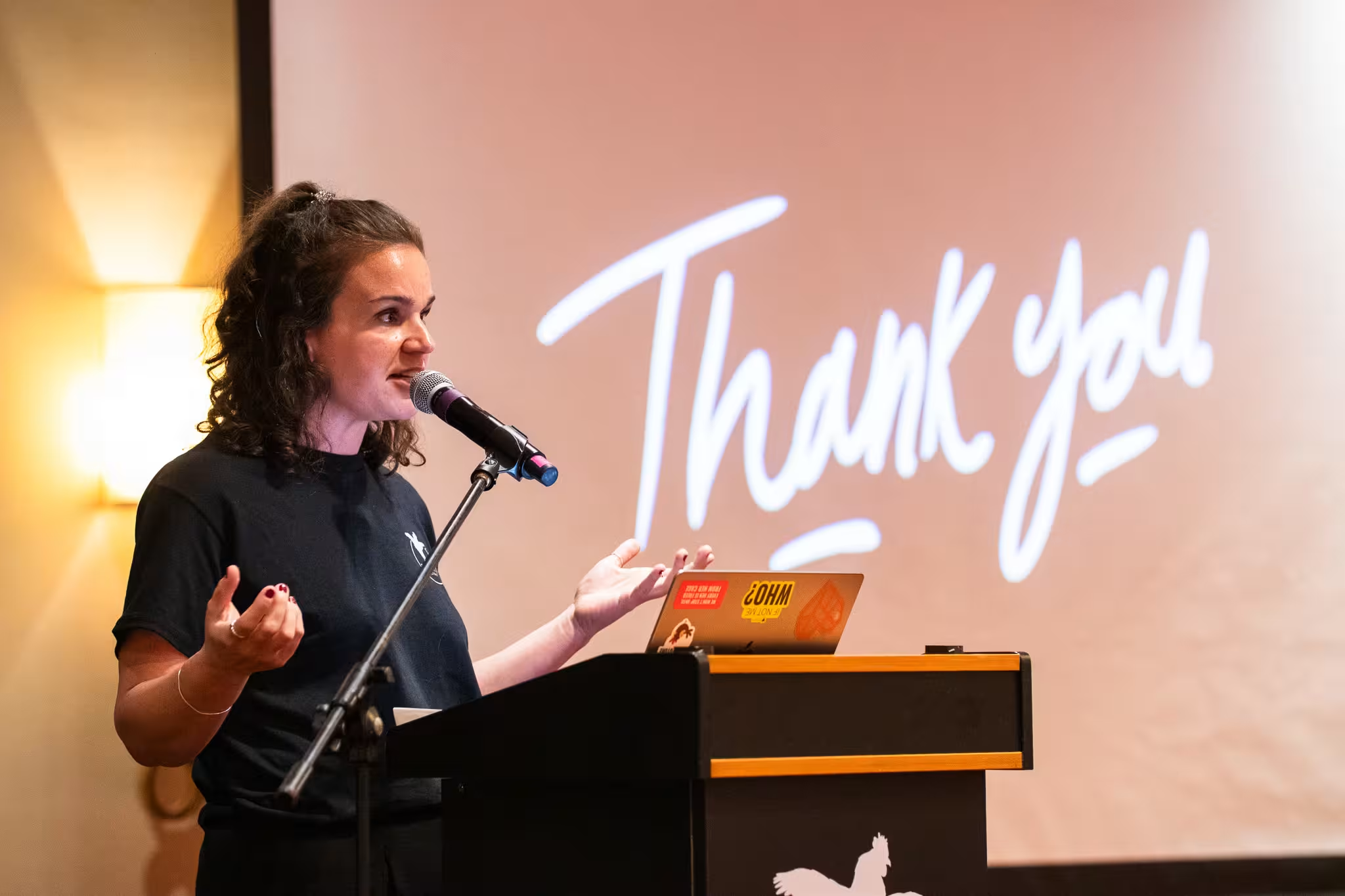


I was in Warsaw with more than 100 activists from 39 countries—standing together for chickens. What I saw reminded me how powerful this movement really is.
I’m Carley, Director of the Open Wing Alliance at The Humane League. Last month, I had the honor of joining our global partners for the 2025 OWA Global Summit in Warsaw, Poland.
For three powerful days, activists from Colombia, Hong Kong, Tanzania, Australia, Indonesia, Peru, and dozens of other countries gathered to share bold tactics, protest side by side, and deepen our shared commitment to ending cruelty to chickens.
What stayed with me most wasn’t the presentations, but the people. Being surrounded by so many powerful activists who care deeply about animals left me recharged and ready to end the abuse of chickens everywhere.
Protest. Pressure. Progress.
One of the most unforgettable moments came when our coalition took to the streets—twice—to call out Radisson Hotels for breaking its global promise to spare hens from cages by 2025.
Armed with megaphones, signs, and sheer determination, activists made it impossible for Radisson to ignore us. We showed up at two hotel locations and sent a clear, global message: a brand built on comfort shouldn’t turn away from cruelty.

This was just one example of what makes the Open Wing Alliance different. We don’t build power behind closed doors—we bring it to the streets, to boardrooms, and across borders.
Different countries, common cause
We heard from groups pushing boundaries in countries where organizing isn’t just difficult—it can be dangerous. In a panel discussion called “Aggression in Disguise,” we heard how activists are adapting corporate campaigning to their unique contexts. Some set up “offices” outside their targets’ buildings, while others held loud and disruptive “circus parties” outside retailers that use caged eggs. Our members’ determination and creativity are inspiring.
The OWA team also presented our strategies for the alliance leading up to 2030, uniting attendees in a common mission. In-person training, recruiting new groups, shifting large parts of the cage-free market around the world—the OWA’s future is ambitious. Alliance members left inspired and ready to take on the big challenges ahead, knowing that we are stronger together.

Another moment that stuck with me was hearing how three OWA groups in Peru teamed up to build something bigger than any of them could have done alone. Recognizing their strengths, they came together, knowing that joining forces would create more impact than working separately. Now, they’re running joint campaigns, hosting in-person events, and one Peruvian group is even extending its support to key campaign work in Ecuador. But what really hit me was how clearly they said it: the animals come first and supersede ego and competition—proof that impact starts with solidarity and a shared purpose.
When global gains become regional wins
This summit was the launchpad for a bold new chapter. In the coming months, we will continue to expand the movement through training, grants, and in-person support.
-
In October, we’re headed to Serbia to train five more groups, bringing the total to 18 trained in 2025 alone.
-
In 2026, we’ll host four regional summits—across Latin America, Africa, Asia, and Europe—to help grassroots leaders collaborate, strategize, and scale their work.

This is what real change looks like: local campaigns fueled by global strategy. And it’s only possible because of the alliance we’ve built—together.
Why showing up matters
For me, the most powerful part of the summit wasn’t a protest or a panel. It was being surrounded by people who truly get it—who see chickens not as products, but as individuals. Living, feeling beings who deserve a world where cruelty is never justified by profit.
Whether you’ve been with us for years or just found your way here, this movement needs you. Every voice matters. Every action adds up.
Because what we’re building isn’t small—it’s global.
And we’re not done yet.

More Like This

MAKING AN IMPACT FOR ANIMALS
From corporate campaigns to global coalitions, this recognition from Animal Charity Evaluators proves that progress is a team effort—and every action adds up.


Factory Farming: What It Is and Why It's a Problem
Factory farms are disastrous for animals, the environment, local communities, and public health.


